
Acai Cup Materials Guide: PE-Coated, Kraft, White & PLA Boards
The board, the interior, and the finish decide how an acai cup prints, holds a cold bowl, and handles disposal positioning. This guide compares PE-coated, white, kraft, and PLA-lined paperboard, explains liners and direct food contact, and walks through the finishing that suits an acai cup.

Awais M · Custom Packaging Specialist
Awais M helps small and mid-sized brands get custom packaging right — the box style, the material, the print finish, and the order quantity that actually fits the budget.
Why Material Choice Drives the Cup
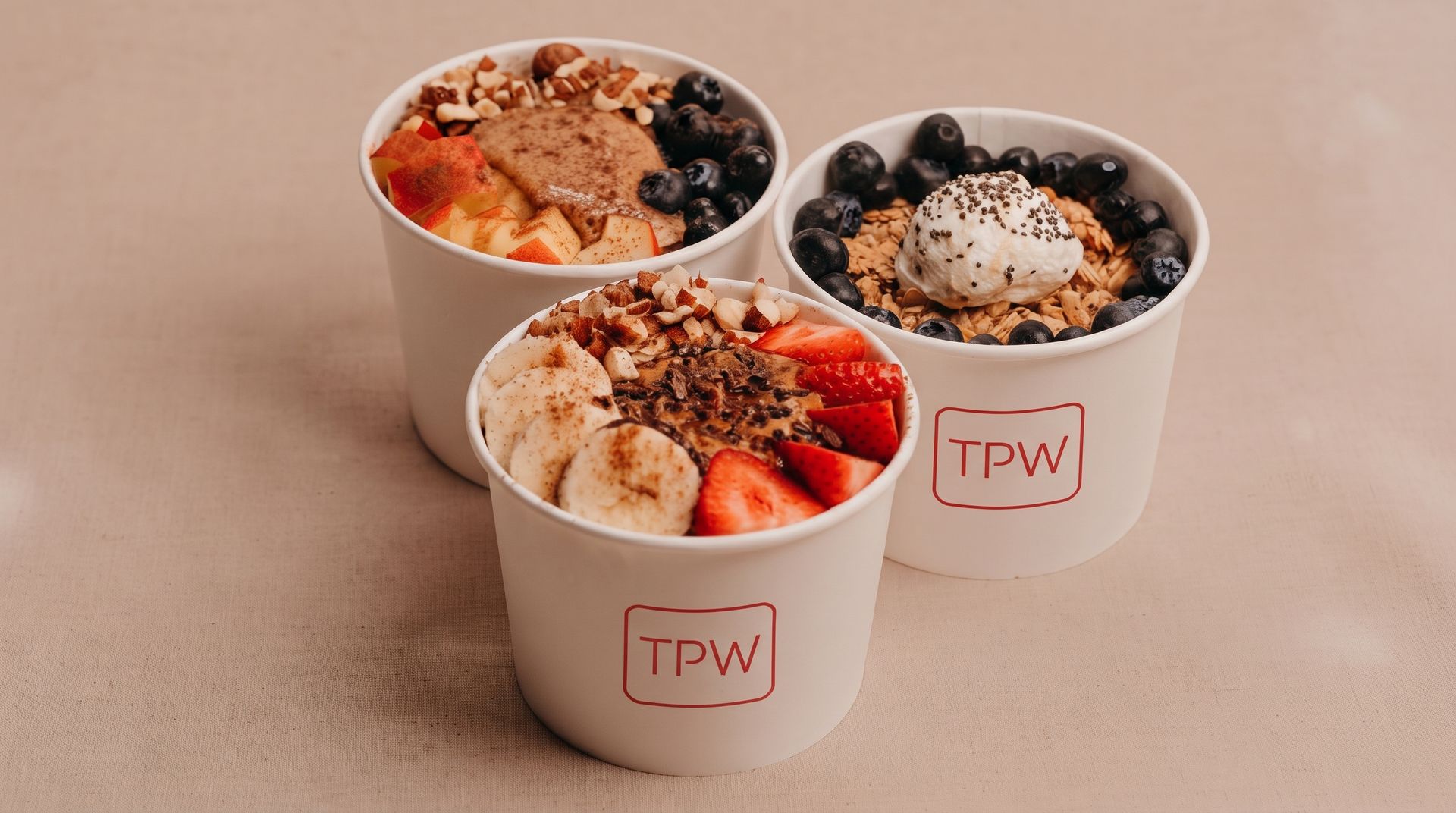
The board an acai cup is built on sets almost everything that follows: how the brand art prints, how the interior handles a cold puree, how the cup reads on the counter, and how easily it recycles or composts. Choosing the substrate first, then matching the interior and finish to it, keeps the build coherent rather than patched together. This guide compares the main substrates, covers liners and direct food contact, and walks through the finishing that suits an acai cup.
Who Orders These Acai Cups
Material choice matters most to operators balancing print, cold performance, and disposal positioning. Common buyers include:
Acai bowl shops choosing a board that prints the brand and holds a cold bowl
Smoothie and juice chains standardizing one substrate across the cold-cup line
Health-focused quick service brands weighing cost per cup against the print surface
Gourmet and specialty retailers running photographic brand art on a smooth white board
Hotel and resort hospitality programs aligning the cup to a sustainability brief
Farmers market and direct-to-consumer acai brands running a natural kraft look
Multi-location wellness operators holding one substrate standard across stores
The program shapes the choice. A brand-heavy shop leans toward white or PE-coated board, an artisan brand leans toward kraft, and a sustainability-positioned program leans toward a PLA-lined cup.
Construction Options Behind the Material
The substrate pairs with the cup build, and the board is matched to the format it carries:
Single-serve cup: the everyday counter build, where the print surface and cost per cup matter most
Vented dome lid cup: a build that shows the topping stack, usually run on a smooth white or PE-coated board
Flat lid cup: a low-profile build for delivery stacking, where the interior coating manages the cold puree
Open service bowl: a dine-in build with no lid, where the board read and the rim finish carry the look
Two-bowl outer carrier: a corrugated carton, a separate substrate from the cup, sized to two cups upright
Four-bowl outer carrier: a wider corrugated carton for family and meal-prep deliveries
Materials Compared
A few substrate families cover most acai cups:
PE-coated paperboard: the workhorse for cold acai bowls. A thin polyethylene inner layer holds the cold puree through the handoff window, and the paperboard outer takes flexographic or offset print cleanly.
White paperboard with food-contact coating: a smooth white surface for sharp full-color brand art, used by chains and specialty retailers running photographic or full-bleed graphics.
Kraft paperboard: a natural tan surface that suits artisan and craft positioning, juice-bar programs, and market or direct-to-consumer brands.
PLA-lined paperboard: a plant-based inner layer that may qualify for commercial composting depending on local infrastructure, used by brands with a compostable position and hospitality programs aligned to sustainability briefs.
The substrate usually follows the channel, the brand voice, and the disposal direction the operator is positioning around. For the full substrate range behind the build, see the packaging materials catalog.
Liners, Parchment, and Direct Food Contact
Acai puree touches the cup interior directly, so the interior surface does the food-contact work rather than the printed outer board. The interior is food-contact-appropriate depending on the liner or coating chosen, the bowl temperature, the hold duration, and any regional or retailer requirements that apply to the program, so the surface is matched to the application rather than promised in the abstract. Direct-contact and indirect-contact applications may use different coating and liner considerations, so the approach is set against how the cup is actually used.
For cold acai, a coated interior such as PE-coated or PLA-lined paperboard is commonly used to hold the cold puree, and a separate liner sheet or parchment is generally not needed the way it is for a hot or greasy application. Where a program wants a barrier between the puree and a kraft or uncoated surface, an inner coating or liner can sit between the contents and the board. Confirm the food-contact approach and your disposal goals during quoting so the interior suits both.
Cold Hold and Moisture
Cold performance is where the spec needs care. A cold acai bowl gives off condensation as it sits, and the interior coating is what manages that moisture against the board, so the barrier is matched to the cold puree rather than assumed. The coated surface may help with light moisture management depending on the coating, the liner, the bowl temperature, and how long the bowl sits before it is eaten. Tell us your typical hold window and whether bowls go out straight from the prep counter during quoting, and the interior is matched to what actually touches the board.
Recycling and Compostable Positioning
The interior choice also shapes the disposal story. Recyclability depends on the coating and any liner used, so a lightly coated board is generally easier to recycle than a heavily coated one. A PLA-lined cup is positioned for commercial composting and may qualify depending on local infrastructure rather than home composting in most regions. Avoid printing an absolute claim on the cup; match the on-cup messaging to the disposal route the brand can actually support, and confirm any compostability or recyclability wording during quoting. See the custom cups listing for the natural-look variants brands often pair with a sustainability position.
Print and Finishing for Acai Cups
Finishing is chosen for the look, not required on every cup. Full-color printing carries brand color and product photography on PE-coated and white paperboard; one- or two-color printing suits kraft for a natural look at a lower print cost, and a matte or gloss coating keeps the artwork crisp on the body. Gourmet programs sometimes add a foil-stamped accent for an upscale counter read. A clean, readable layout generally reads more appetizing than a crowded one, since the topping stack carries much of the visual. Browse the custom food boxes industry page for how the printed cup fits a wider food program.
Common Mistakes to Avoid
Treating the printed board as the cold barrier: the outer print is not the interior. Match a coated or lined interior to a cold puree application.
Promising moisture or cold performance in the abstract: it depends on the coating, liner, temperature, and hold time. Match the interior to the actual bowl.
Printing an absolute recyclable or compostable claim: the disposal route depends on the coating and local infrastructure. Match the on-cup wording to what the brand can support.
Choosing kraft for fine full-color art: brown board mutes bright color. Choose white or PE-coated paperboard for photographic brand graphics.
Assuming a coated cup recycles like plain board: the coating complicates recycling. Confirm disposal goals during quoting.
Locking the substrate before the food-contact review: the interior should suit the cold puree application. Confirm the food-contact approach before artwork is locked.
Order Custom Acai Packaging
Send your substrate preference, interior and food-contact needs, disposal positioning, print and branding, lid type, and target quantity to The Printing World. Our team will review the details and provide a quote and proofing guidance once the specifications are confirmed. Reach us through sales@theprintingworld.com, or +16133831487.
Standard production runs 10–14 business days after artwork approval. For PLA-lined substrates and specialty finishes, the timeline is reviewed against that window and confirmed during quoting. Reorders on locked artwork may reduce proofing time because the structure and artwork are already approved, but standard production remains 10–14 business days after artwork approval unless otherwise confirmed. Compare every substrate on the custom acai packaging product page.
Need custom packaging for your product?
Get pricing, samples, and expert advice — no commitment required.