
Calzone Boxes for Pizzerias, QSRs & Delivery Brands
Pizzerias, Italian quick-service kitchens, and ghost kitchens all sell calzones, but they do not need the same box. This guide maps calzone packaging to the restaurants and delivery models that order it, covering vents, board, closure, and branding so the box fits the way each order leaves the kitchen.

Awais M · Custom Packaging Specialist
Awais M helps small and mid-sized brands get custom packaging right — the box style, the material, the print finish, and the order quantity that actually fits the budget.
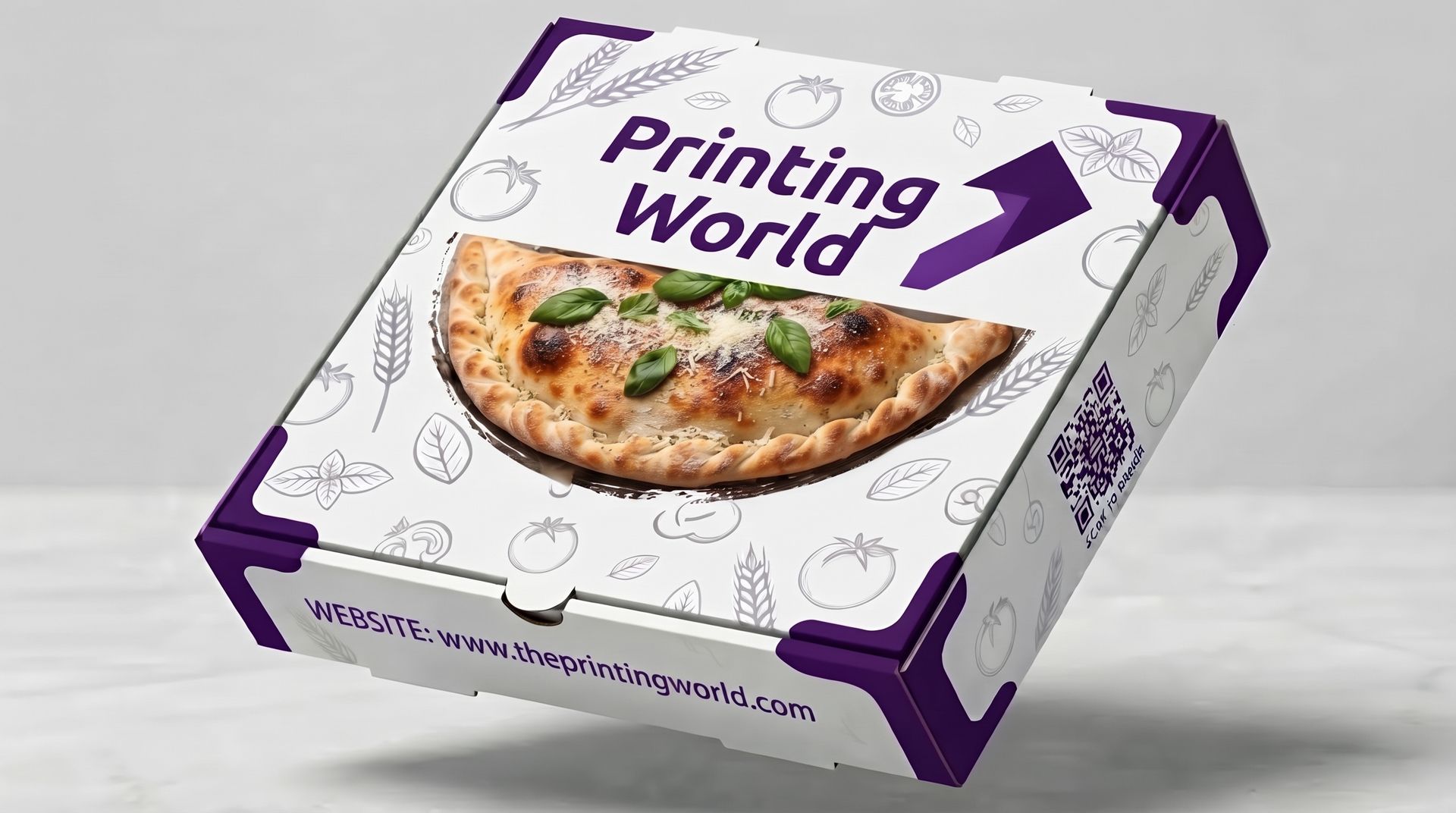
Pizzerias, Italian quick-service kitchens, and delivery-first brands all sell calzones, but they do not all need the same box. The right calzone packaging tracks the way the order leaves the kitchen: handed across a counter, set in a hot case, or dropped into a delivery bag for a courier. This guide maps calzone boxes to the restaurants and service models that order them.
Get the service model right, and the rest of the spec follows. A dine-in and takeout pizzeria, a high-volume Italian quick-service counter, and a ghost kitchen running delivery only will each weight vents, closure, and board differently.
Who Orders Calzone Boxes for Restaurants
The calzone box buyer set is wider than a single restaurant type:
Full-service pizzerias: branded boxes that carry the house calzone across dine-in leftovers, takeout, and delivery.
Italian quick-service and fast-casual kitchens: standardized clamshells that close fast during a lunch rush.
Ghost kitchens and virtual brands: closed cartons built for delivery handoffs and app orders.
Food trucks and street vendors: compact boxes that hand off in seconds at a window.
Delis and grab-and-go counters: boxes for baked turnovers in a display case.
Bakeries and cafes: printed boxes for a hot or chilled grab-and-go set.
Catering and event kitchens: multi-packs and corrugated boxes for bulk orders that travel.
Stadiums, cinemas, and concessions: sturdy single-serve boxes for fast, high-volume service.
Browse the wider foodservice range on the food boxes page, and compare box formats including burger boxes, sushi boxes, and fries boxes.
Construction Options by Service Model
Each service model leans toward a different build:
Dine-in and takeout: a vented clamshell that closes in one motion and stacks in a hot case.
Counter quick-service: a kraft or SBS clamshell sized to the standard calzone for speed.
Delivery and ghost kitchen: a tuck-top carton or corrugated box that survives the bag and the ride.
Share and family orders: a two-piece base-and-lid box for a stuffed or oversized turnover.
Retail and bakery display: a window carton so the buyer can see the product, depending on the setting.
Catering volume: corrugated multi-packs that hold several turnovers steady in transit.
Send your service model and average order during quoting, and we will match the structure. For the flat round delivery format, see the separate pizza boxes build.
Delivery, Heat, and Steam
Delivery is where a calzone box earns its spec. A turnover boxed straight from the oven gives off steam, and a fully sealed box can trap it against the crust. Die-cut vents may help reduce sogginess on the way out, while a coated or greaseproof-lined board keeps oil off the panels and the customer's hands. For longer routes, an E-flute corrugated box adds rigidity and a little insulation. Confirm the route length and whether orders are boxed hot during quoting so the vent and board choice match the service. Tell us your service model, average calzone size, and daily order volume so we can size the program.
Branding Across the Service
A calzone box is a moving brand panel, whether it sits on a counter, in a delivery bag, or on a bakery shelf. Full-color printing carries photography and brand color on SBS and coated board, while one- or two-color printing suits a clean logo on kraft for a casual look. Keep the artwork consistent across clamshell and carton builds so a delivery order and a counter order read the same. Compare board options on the materials catalog.
Common Mistakes to Avoid
One box for every channel: a counter clamshell and a delivery carton are different builds; forcing one box across both compromises one of them.
No vents on a hot-box program: sealing a freshly baked turnover can trap steam; vents may help where the calzone is boxed hot.
Under-built delivery boxes: a light clamshell can flex in a bag on a long route, so confirm whether a corrugated or coated build suits the distance.
Inconsistent branding across builds: different art on clamshell and carton makes one channel look off-brand.
Ignoring filling richness: a cheesy, oily calzone usually needs a coated board or greaseproof liner, confirmed against the recipe.
Sizing to the busiest order only: a single footprint leaves single-serve orders loose and share orders crushed.
MOQ and Lead Time
Order quantities generally start from around 100 units, with per-unit pricing improving at higher counts. Standard production runs 10 to 14 business days after artwork approval, with specialty die-cuts, liners, and finishing reviewed against that window when the spec is locked. Reorders on locked artwork may reduce proofing time because the structure and artwork are already approved, but standard production remains 10–14 business days after artwork approval unless otherwise confirmed.
Order Custom Calzone Boxes
Send your calzone length and width, clamshell or carton choice, substrate, grease handling need, branding, and target quantity, and we will recommend a build. Contact The Printing World at sales@theprintingworld.com, or message us on WhatsApp at +16133831487.
Need custom packaging for your product?
Get pricing, samples, and expert advice — no commitment required.