
What to Print on a Dog Soap Box, Panel by Panel
A dog soap carton has more flat panels than most makers use well. Here is what goes on each one, how the box style changes the space, and what to check before the artwork locks.

Awais M · Custom Packaging Specialist
Awais M helps small and mid-sized brands get custom packaging right — the box style, the material, the print finish, and the order quantity that actually fits the budget.
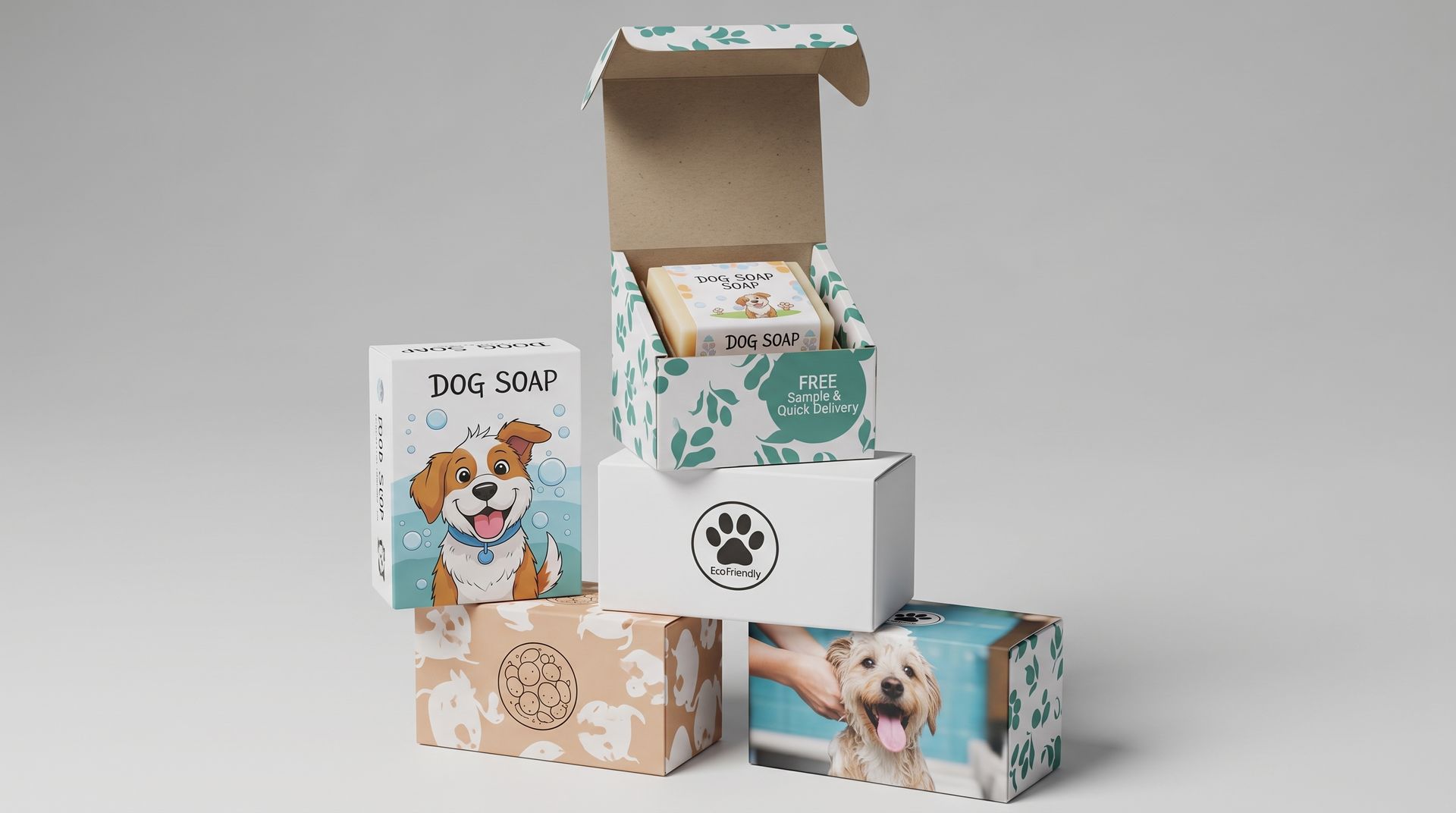
The Panel Plan in Short
Put the formula or scent name and your brand on the front, where the shopper decides. Give one side panel to the ingredient list and directions for use, add the net weight, and keep the back for the brand story and your contact details. Before any of it goes to print, have every pet-care claim reviewed, because dog soap is a skin-contact grooming product and claim rules vary by market.
The standard build for custom dog soap boxes is a tuck-end carton, which is why this works: the bar slides in, the flaps tuck closed, and you are left with four broad panels to print. How you divide them decides whether the carton sells the bar or just holds it.
Panel by Panel
Panel | What goes on it | Planning note |
|---|---|---|
Front | Brand mark, formula or scent name, a key ingredient | Has to read at a glance next to shampoos and grooming kits; a window takes part of this panel |
Side one | Ingredient list, directions for use | Give it real space before the art is drawn |
Side two | Net weight, any warning text your market requires, a batch note | Keep type plain and high contrast |
Back | Brand story, contact details | Explain the formula in the brand's own voice |
Front: Sell the Bar at a Glance
Dog soap shares the aisle with shampoos, wipes and grooming kits, so the front has one job: say what the bar is and whose it is, quickly. When the bar is enclosed, the front panel carries the sale, and the scent name, the key ingredients and the brand mark have to read at a glance against neighboring products. Resist adding more.
Box style shapes this panel. A straight tuck-end carton, with both flaps tucking from the same side, gives a cleaner front face when the front does the selling. A die-cut window backed by clear film shows a botanical or marbled bar, but it takes print area from the panel it sits in, so the name and brand mark must fit around it.
Sides: Ingredients, Directions and Weight
A pet owner reads the formula, the ingredients and the directions before buying. Those lines need room and clear type, not whatever space the illustration leaves behind. Crowding the label panels is a common mistake: plan the panel layout before the art locks so nothing is squeezed.
The second side is the natural home for the net weight and any warning text your market requires. Small-batch makers can add a batch note there too; a fully enclosed carton gives full panels for a scent name, an ingredient list and a batch note, which a sleeve or open-ended wrap cannot match.
Back: The Brand Story
The back panel is where a natural or artisan maker explains why the bar exists: the oatmeal, the neem, the coconut oil, the small batch. It is also where your contact details sit for repeat orders. Kraft is the common pick for natural dog soap positioned around oatmeal, neem or coconut oil, and one- or two-color print on kraft suits that handmade story.
If the back carries photography or a full-color dog illustration, think about the board. Brown board softens vivid print, so run SBS or recycled white board for full-color panels.
Claims: Review Before You Print
Anything that says what the soap does for a dog's skin or coat is a claim, not decoration. Dog soap is a skin-contact grooming product, and claim rules vary by market, so confirm any pet-care or formulation claims with your own review before the artwork locks. The printer prints the label artwork you supply.
A simple discipline helps: write the claims copy first, have it checked, then design around the approved wording rather than fitting approved wording into finished art.
Keep the Planned Panels Readable
A cured bar can carry a little surface oil, and a printed face benefits from a coating that keeps the artwork from picking up marks. A matte or soft-touch coating keeps the printed panel clean against a lightly oily bar, so the ingredient and directions text stays legible.
If you also label the bar itself, the soap bar labels guide covers face stock, adhesive, shape and finish, so the label and the carton tell the same story.
Need custom packaging for your product?
Get pricing, samples, and expert advice — no commitment required.