
Custom Eyeliner Boxes: A Buyer Guide to Cartons, Cradles & Print
Eyeliner sells on brand look before the applicator is ever tried, so the box carries real weight. This guide walks a buyer through the carton styles, unit cradles, substrates, and finishing that go into custom eyeliner boxes, and the specs to send so eyeliner seats clean and the print lands the way the brand intends.

Awais M · Custom Packaging Specialist
Awais M helps small and mid-sized brands get custom packaging right — the box style, the material, the print finish, and the order quantity that actually fits the budget.
Why the Box Matters for Eyeliner
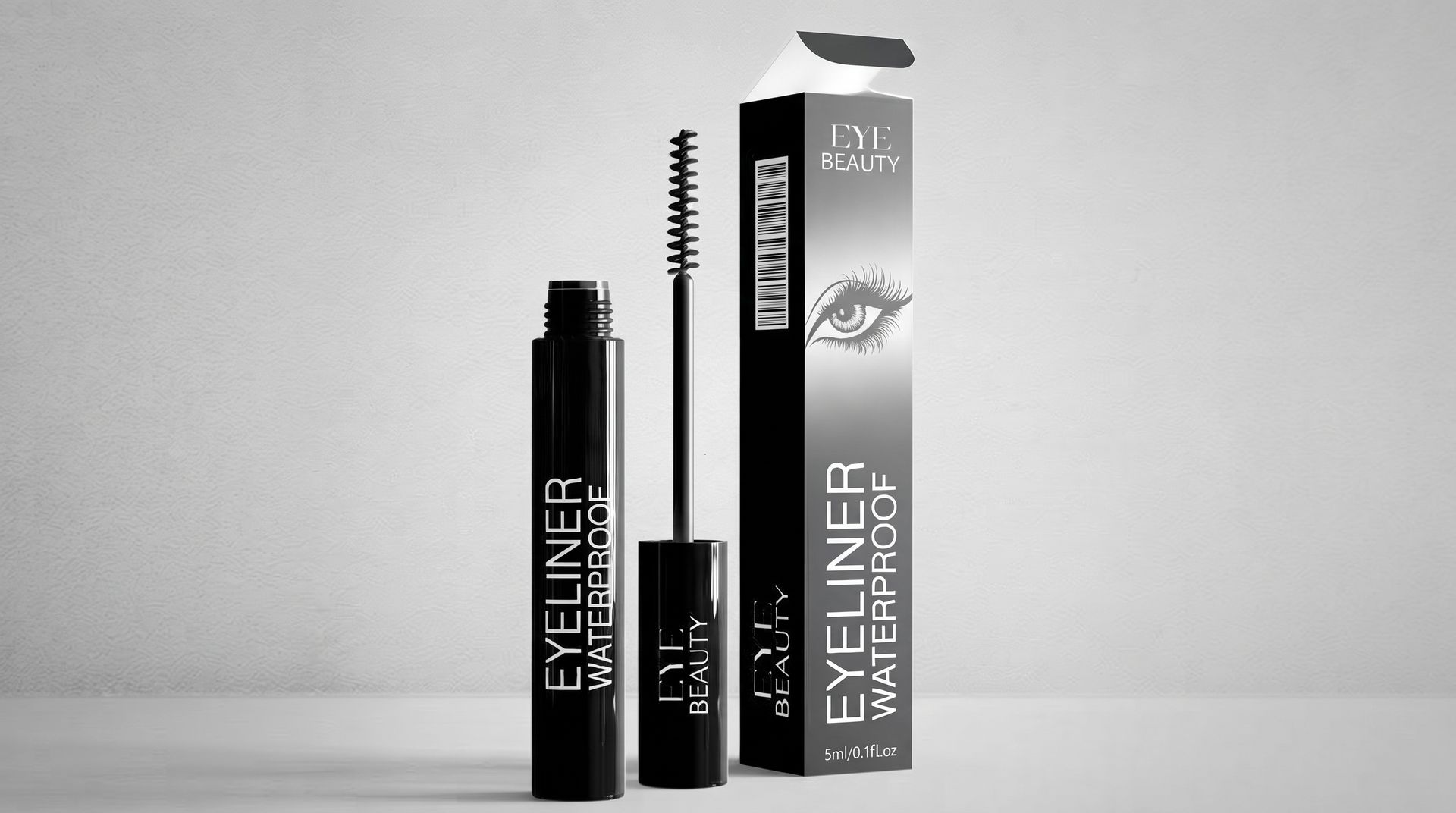
Eyeliner is an eye cosmetic that sells on brand look and product claims before the applicator is ever tried. The box is the first thing a buyer sees on a shelf or inside a delivery, so it presents the brand, protects the slim unit from knocks, and seats the unit so it does not slide in transit. The box is secondary packaging: it presents and protects the sealed eyeliner unit rather than touching the applicator or formula.
The unit format drives most of the decisions. A folded carton on coated paperboard carries full-color art at a mid-tier cost, while a rigid box gives a heavier feel for a flagship line. This guide walks through the styles, fit options, substrates, and finishing so you can send a clear spec for a liquid pen, a felt-tip liner, a pencil, or a gel pot.
Who Orders Custom Eyeliner Boxes
Indie cosmetic brands launching a debut eyeliner that needs a clean, snug carton on a modest budget
Retail color cosmetics brands running a shelf line that warrants bold print and finishing
Color cosmetics labs and contract fillers standardizing one carton to a stock pen or pencil
Private-label programs producing one eyeliner for several brand labels
Beauty subscription brands matching a compact carton to a slim pen or a sample unit
Gift and promotional programs presenting an eyeliner inside a mixed eye-makeup set
Online-first beauty sellers needing a box that travels direct to a customer
Pro and salon makeup lines packing a liner for retail resale at the chair
Each buyer shapes the build. An indie brand leans toward a folded carton with one strong finish, while a flagship retail line leans toward a rigid box with a foil-stamped logo.
Box Styles and Construction Options
Eyeliner boxes run mostly across a folded tier, with a rigid option for a higher presentation. The common builds are:
Straight tuck-end carton: both tuck flaps open on the same face, the mid-tier workhorse for eyeliner, light to ship flat
Reverse tuck-end carton: top and bottom flaps reversed, common for hand-filled runs
Auto-lock bottom carton: a locking base that snaps square, used where a heavier gel pot or a multi-unit pack needs the base to hold
Seal-end carton: a glued-end carton for an automated fill line where a sealed close is wanted
Sleeve and tray carton: a printed sleeve over a tray for a slide-out reveal of a pen or a pencil set
Two-piece rigid box: a separate lid and base on rigid chipboard for a structured, gift-set feel
Folded cartons ship flat and set up by hand or on a line; rigid boxes ship set up and weigh more. Compare the builds on the rigid boxes listing.
Unit Fit and Inserts
Because a liquid pen and a pencil are long and narrow, the fit keeps the unit from sliding end to end, while a gel pot needs a shallow cavity that stops it rolling. A paperboard cradle seats the unit at a low cost, a die-cut tray sits it flush or holds a pencil set side by side, and a cut foam cradle suits a rigid gift box or a multi-unit set. A snug carton sized to the unit can also hold it with no insert. Any insert that contacts the unit should use materials suitable for the sealed cosmetic unit, depending on the colorant and product-contact considerations.
Substrates and Finishing in Brief
Folded cartons run on SBS, coated paperboard, or kraft; rigid boxes use chipboard wrapped in a printed paper. SBS is commonly used in calipers such as 14 to 24 pt depending on application. Finishing is chosen for the look rather than required on every box: foil stamping for a metallic mark, embossing or debossing for tactile detail, spot UV for a gloss highlight, and matte or gloss lamination for the surface tone. A cut PET window lets a buyer see the pen or pencil, and PET window film may offer higher clarity and rigidity depending on film thickness and supplier specification. See the materials catalog and finishes options for the full range.
Before you lock a spec, send us your unit height, width, and depth, the box style, the substrate, the finishing, the insert choice, and your target quantity.
Common Mistakes to Avoid
Sizing by format name instead of shape: a felt-tip pen and a brush-tip liquid pen called the same format can differ across the body and cap. Spec the box and cradle to the actual unit height, width, and depth.
Ignoring how slim the unit is: a liquid liner pen slides more easily than a squat pot. Use a cradle or a snug carton so it stays put in transit.
Leaving too much clearance: extra room lets the pen rattle and the presentation suffers. Size to the unit plus a measured clearance.
Defaulting to foam when paperboard fits: foam adds cost and complicates recycling for a light unit. Use a paperboard cradle where it holds.
Treating the box as a barrier: the sealed pen, pencil, or pot is the barrier, so don't expect the carton to protect the formula. Confirm the box's job is presentation and impact protection.
Skipping a press proof on fine art: small type and foil registration on a slim panel can shift. Review a proof before the run.
MOQ, Turnaround, and Reorders
Order quantities generally start from around 100 units for standard sizes and substrates, and per-unit pricing improves at higher counts. Standard production runs 10–14 business days after artwork approval, with rigid construction, cut cradles, windows, and finishing reviewed against that window when the spec is locked. Reorders on locked artwork may reduce proofing time because the structure and artwork are already approved, but standard production remains 10–14 business days after artwork approval unless otherwise confirmed.
Order Custom Eyeliner Boxes
Send your unit dimensions, box style, substrate, finishing, insert choice, and target quantity to The Printing World. Our team will review the details and provide quote and proofing guidance once the specifications are confirmed. Reach us through sales@theprintingworld.com, or +16133831487, and browse related formats on the cosmetic boxes page.
Need custom packaging for your product?
Get pricing, samples, and expert advice — no commitment required.
Industries