
Kraft vs White Soap Boxes: Choosing the Board for Your Bar and Artwork
Kraft or white board for soap boxes comes down to your artwork, your bar and the claim on the box. Compare the boards side by side before the design is locked.

Awais M · Custom Packaging Specialist
Awais M helps small and mid-sized brands get custom packaging right — the box style, the material, the print finish, and the order quantity that actually fits the budget.
The Short Answer
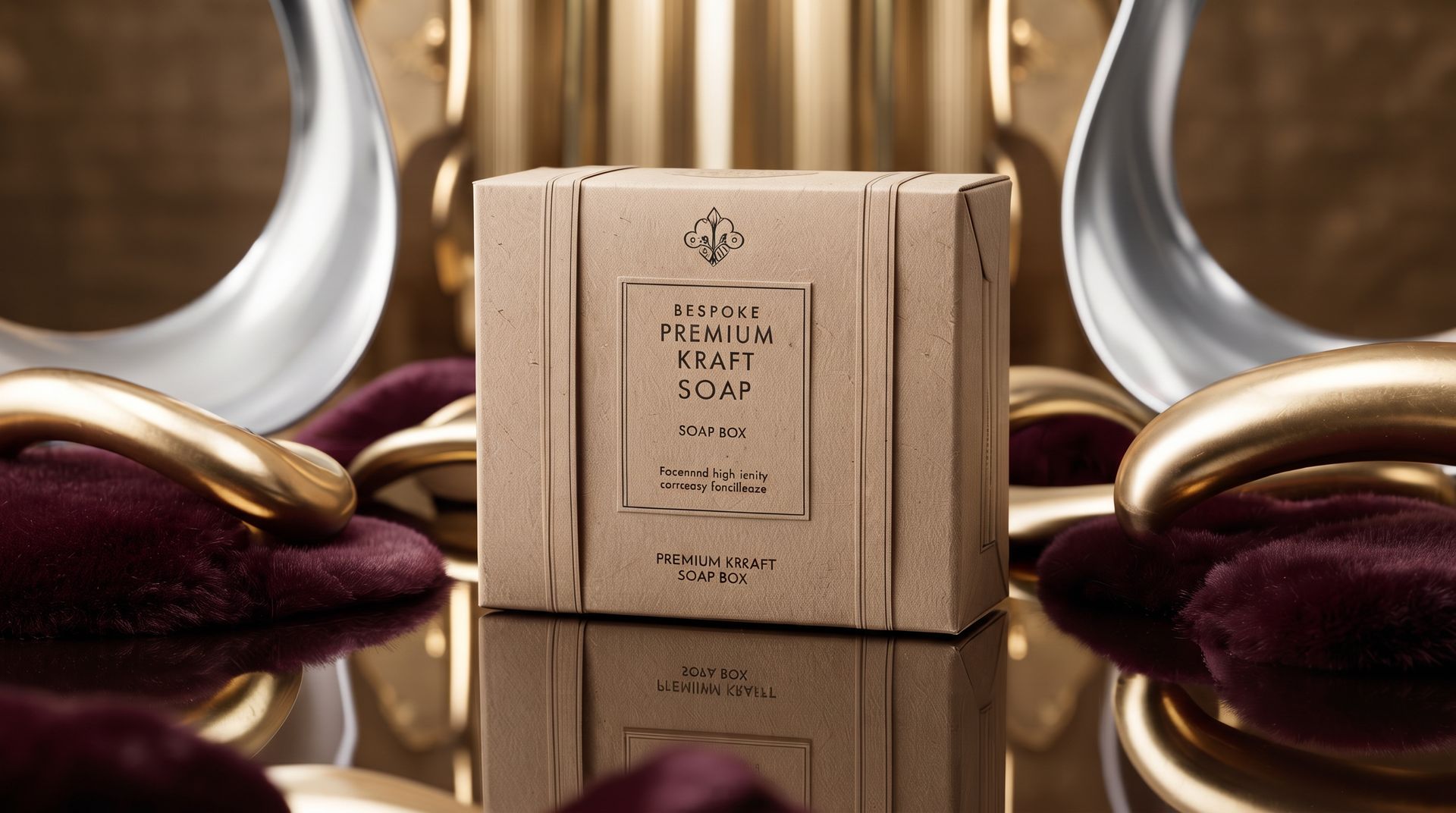
Pick kraft when your soap sells on a natural, handmade story and the artwork works in one or two dark inks. Pick white board when the design relies on bright color, soft pastels or photographs. If you need some of each, coated unbleached kraft (CUK) splits the difference, with a white coated print face over a board that stays brown inside and at the edges.
The custom kraft soap boxes page explains how brown board behaves once you have chosen it. This post is about making that choice.
Brown and White Board Compared
Question | Uncoated kraft | Coated unbleached kraft (CUK) | White board (SBS) |
|---|---|---|---|
Surface | Brown both sides, slightly fibrous | White coated print face, brown reverse | Bright white |
Full-color art and photos | Warm, darker cast; photos lose contrast | Prints much closer to a white carton | Carries full-color art |
Inside panels and cut edges | Brown | Brown | White throughout |
Sweating or oily bar | Absorbent, so it can mark | Suggested for glycerin-heavy bars | A coated print panel helps resist marks |
When Brown Kraft Is the Right Choice
The brown is not printed on; it runs through the whole sheet, so the cut edges, folds and inside panels all match. That consistency is the appeal for cold-process and botanical makers whose labels already lean on earthy colors and plain type. It also suits market sellers who sleeve bars for the table, low-waste refill shops stocking soap without plastic wraps, and hotel programs that want a small carton with a one-ink logo.
Design for the board from the start. Black and other dark inks such as deep green, navy and oxblood stay crisp on kraft, and simple line art suits it. Pale colors sink into the brown, and very fine foil lines or tiny reversed type can break up on the textured surface.
When White Board Is the Better Fit
If your brand is built on vivid color, a bright pastel palette or product photography, brown board works against you: it mutes bright print, and full CMYK artwork takes on a warm, darker cast. Bright white SBS carries full-color art, and recycled board gives a visibly eco-leaning look while still taking full color. The custom soap bar boxes page covers white-board cartons.
Bleached board is whitened all the way through, so it drops the kraft look entirely. If that is what you want, choose a white carton outright rather than covering kraft in white ink.
Two Ways to Get Color on Kraft
White ink is the first. Printed as a spot color it gives bright logos and type on brown; laid down as a base under other inks it lets them land nearer their intended shade. It adds a print pass, so mark the areas that need white when you send artwork.
CUK is the second. Its long fibres resist tearing at the tuck slots, and because only the print face is coated, the box still reads as kraft from the inside and at the edges.
Bars, Coatings and the Recycling Note
The bar matters as much as the artwork: uncoated kraft soaks up moisture, so a glycerin-rich bar that sweats can mark it.
Coatings and windows also change what you can say about disposal. A plain uncoated kraft carton is paperboard, while a film window or plastic laminate turns the box into a mixed-material item. Keep any recycling wording on the box conditional, and do not call a box plastic-free if it carries a film window.
Decide the Board Before the Artwork
The same design looks different on brown and on white, so settle the board first and then plan the artwork for it, rather than adapting a design drawn for white. Send your bar size and weight, the box style, whether the bar is wrapped, and the artwork with ink colors marked; the proof will show how the inks sit on the board you chose.
Need custom packaging for your product?
Get pricing, samples, and expert advice — no commitment required.