
Custom Wig Boxes Guide: Construction, Materials & Sizing
Wig boxes hold a coiled unit, present the hair, and carry the brand across printed panels. The build, substrate, and finishing shift across folded cartons and rigid boxes. This guide walks through the main builds, how buyers spec them, and what to send when requesting a quote.

Awais M · Custom Packaging Specialist
Awais M helps small and mid-sized brands get custom packaging right — the box style, the material, the print finish, and the order quantity that actually fits the budget.
What Custom Wig Boxes Do
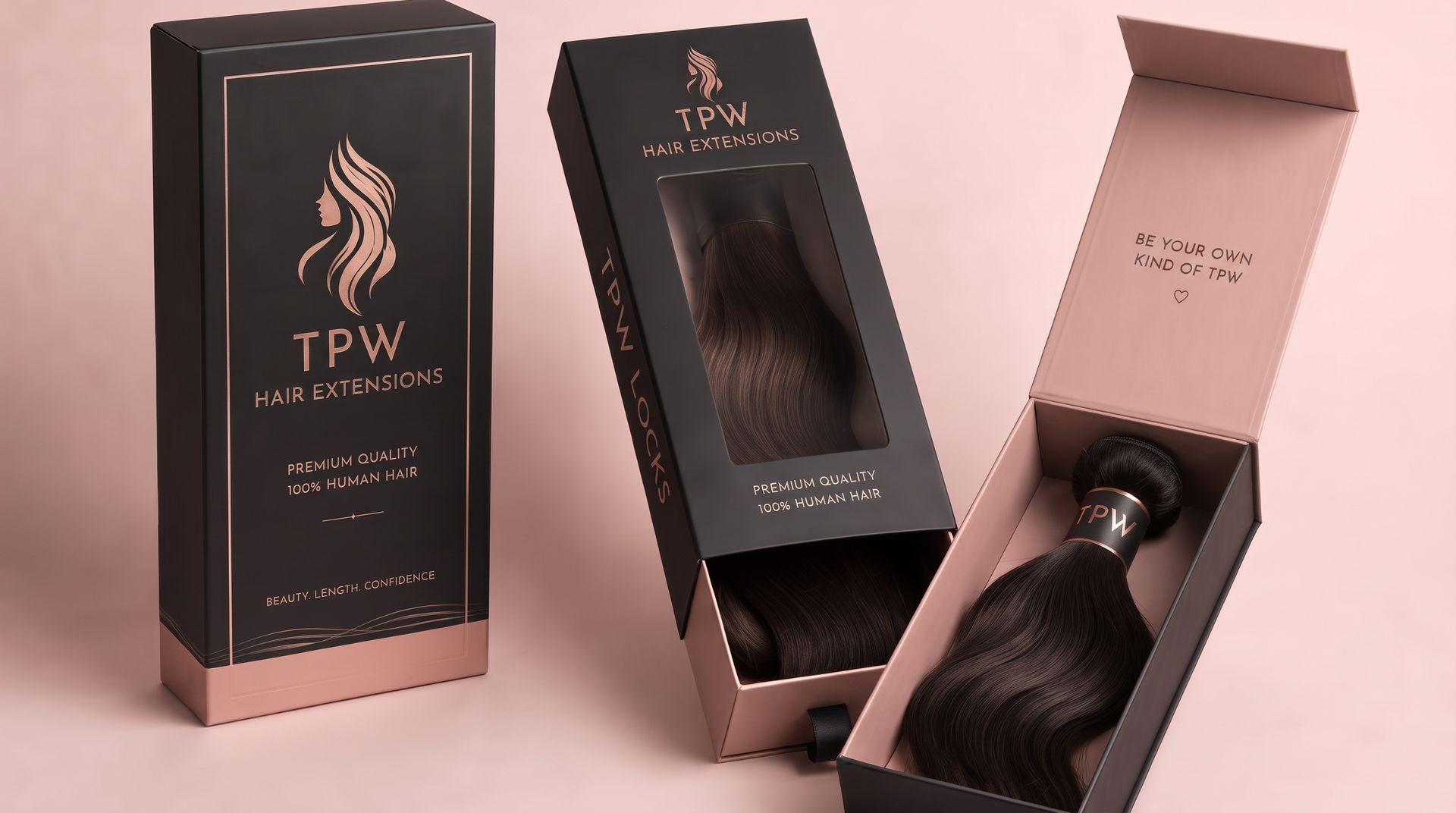
A custom wig box has three jobs. It holds the coiled wig, lace front, or hair bundle so the unit does not crush or snag; it presents the hair so the unboxing reads as intentional; and it carries the brand across the printed panels. A custom box does all three, shaped around the unit length and how the hair is sold.
Hair sells on look, length, and texture before a customer ever wears it, so the box does real work at the point of sale and in a direct-to-consumer shipment. The box is secondary packaging, so it presents and protects the unit rather than replacing the hairnet or wrap the wig ships in. This guide covers the main buyer contexts, the builds that fit each, and what to send when you request a quote.
Who Orders Custom Wig Boxes
Wig boxes come from a buyer set focused on presenting a unit cleanly and labeling length, color, and density. Common buyers include:
Hair and wig brands running retail and direct-to-consumer lines that need consistent branding across lengths and textures
Hair extension and bundle sellers packing coiled bundles, wefts, and closures, often with a window to show color
Lace front and frontal lines that need a box which protects the lace without crushing it
Salons and stylists with private labels ordering short runs for resale or take-home units
Beauty-supply and wholesale distributors stacking boxes that label length and density clearly for shelf resale
Hair topper and ponytail brands matching a smaller box to a partial unit
Subscription and gifting programs presenting a wig cleanly inside a larger shipment
The use case shapes the build. A boutique wig brand leans toward a magnetic rigid box with a foil-stamped logo, while a high-turn extension seller leans toward a folded carton with a window and clear length labeling to keep per-unit cost in reach.
Construction Options and Box Styles
Wig boxes run across a folded tier and a rigid tier, matched to the unit, the channel, and how the brand wants the box to feel. Common wig box styles include:
Magnetic-closure rigid box: a hinged lid with a magnetic catch, the common pick for a retail or direct-to-consumer wig that opens like a presentation case.
Two-piece rigid box: a separate lid and base on rigid chipboard for a structured box that protects a lace unit.
Drawer and sleeve box: a printed sleeve over a slide-out tray for a slide-open reveal of the coiled hair.
Flip-top folding carton: a folded paperboard box with a tuck or flip lid, a mid-tier workhorse that ships flat.
Window carton: a folded or rigid box with a die-cut window and film so a buyer can see color and texture.
Tuck-end folding carton: a straight or reverse tuck carton for a lighter retail tier, economical at higher counts.
Corrugated mailer: a sturdier outer box for direct-to-consumer shipping, printed or plain.
Folded cartons ship flat and set up on a line; rigid and magnetic boxes ship set up and weigh more. Compare builds on the rigid boxes listing and the sleeve and tray boxes options.
Materials and Substrate
The substrate follows the tier, the print the art needs, and the protection the unit calls for. A lace front leans rigid; a bundle pack can run lighter. Common picks are rigid chipboard wrapped in printed paper for magnetic and two-piece boxes, bright white SBS for print-forward folded cartons, kraft paperboard for a natural look, and corrugated for mailers and heavier outer boxes. Recycled-fiber paperboard is available for sustainability-positioned lines depending on supplier and finishing.
Recyclability depends on the coating, lamination, and any rigid wrap, so a plain folded carton is generally easier to recycle where facilities accept it than a laminated magnetic box. See the materials catalog for the full range.
Sizing the Box to the Wig
Wig box size scales with the unit, not a single standard. A short bob coils into a compact footprint, a long lace front needs a deeper box, and a multi-bundle pack needs more depth again. The box is sized around the coiled diameter and unit length plus clearance so the cap or wefts seat without forcing. Hair length and density change the coil, so two units at the same labeled length can need different clearance. Send your wig length, density, and coiled dimensions for a size recommendation.
Print and Finishing
Wig boxes print in CMYK across the panels so the art, length labels, and color names sit cleanly. Finishing is chosen for the look rather than required on every box: foil stamping for a metallic brand mark, embossing or debossing for tactile detail, spot UV to frame a logo, and matte, gloss, or soft-touch lamination to set the brand's tone. Rigid and magnetic boxes carry heavier finishing well, while a folded carton usually runs one or two finishes to hold the mid-tier cost. Browse the finish options.
Common Mistakes to Avoid
Sizing to the labeled length, not the coil: two units at the same length can coil differently by density, so size around the coiled dimensions plus clearance.
Boxing the lace too tight: a box that compresses a lace front can mark the lace, so leave clearance for the unit to seat without forcing.
Skipping a liner or platform on a retail box: a coiled unit can shift in transit, so use a liner or platform when presentation matters; a snug box may be fine for plain wholesale.
Assuming a window suits every channel: a window helps wholesale color selection but adds a film step, so confirm it is worth it for your channel.
Choosing rigid when folded would do: rigid raises cost and weight, so match the tier to the channel rather than defaulting up.
Locking finishing before the substrate: foil and spot UV behave differently on kraft, SBS, and a rigid wrap, so confirm substrate and finishing together.
Order Custom Wig Boxes
Send your wig length, coiled dimensions, box style, substrate, print, and finishing for a recommendation and quote. Standard production runs 10–14 business days after artwork approval. Reorders on locked artwork may reduce proofing time because the structure and artwork are already approved, but standard production remains 10–14 business days after artwork approval unless otherwise confirmed. Contact The Printing World at sales@theprintingworld.com or message us on WhatsApp at +16133831487.
Need custom packaging for your product?
Get pricing, samples, and expert advice — no commitment required.