
Custom Hoodie Packaging Guide: Construction, Materials, Sizing
Hoodie packaging has to protect a thick, folded hoodie in transit and carry an apparel brand through the unboxing moment. This guide covers construction, board, sizing, tissue, and printing so you can spec custom hoodie packaging with confidence and send a tighter brief.

Awais M · Custom Packaging Specialist
Awais M helps small and mid-sized brands get custom packaging right — the box style, the material, the print finish, and the order quantity that actually fits the budget.
What Hoodie Packaging Has to Do
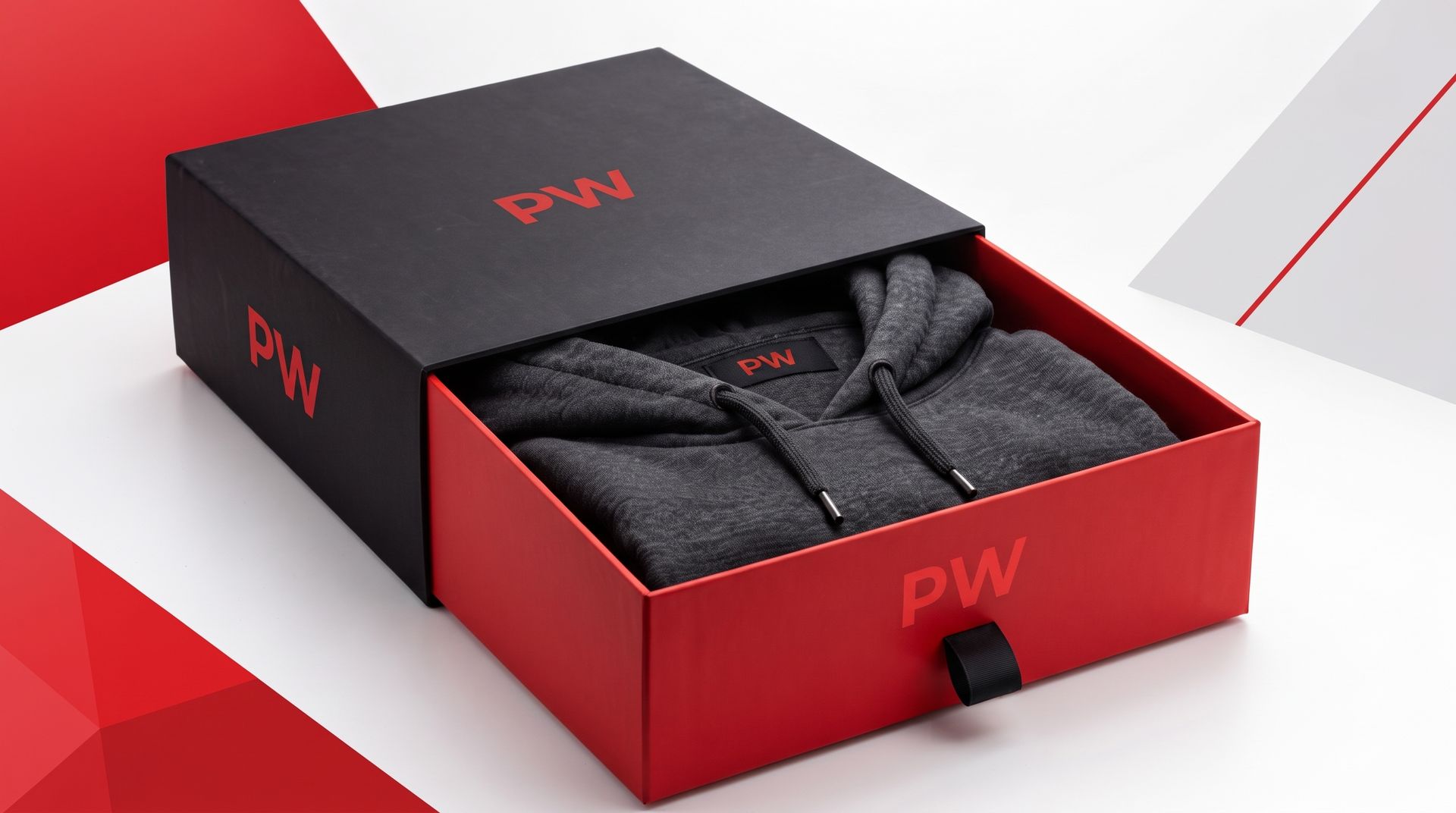
Hoodie packaging has two jobs at once. It protects a thick, folded hoodie from a warehouse shelf to a customer's hands without crushing the fold, and it carries an apparel brand's name through the moment the box opens. Both jobs shape how the box is specced.
Custom hoodie packaging is corrugated or paperboard cartons sized to a folded hoodie, with internal depth for the fold stack plus tissue and any insert. The board, the construction, and the inside details are all chosen around the garment itself rather than picked from a fixed shape.
This guide walks through the construction options, the board choices, sizing, tissue, and printing so you can send a tighter brief and get a box that fits the hoodie you actually ship.
Who Orders Custom Hoodie Packaging
Hoodie packaging is bought across several kinds of brands, and each specs the box a little differently:
DTC streetwear brands shipping direct to customers who want a mailer that survives transit and reads as the brand on arrival
Retail clothing lines presenting a folded hoodie on a shelf or in a store gifting program
Merch and band stores shipping a heavyweight hoodie as a flagship item
Drop and subscription programs packing a hoodie on a recurring or limited release cycle
Ecommerce sellers coordinating one box program across hoodies and related garments
Knowing which channel the box serves keeps the spec realistic, since a self-shipping mailer and a store gifting box ask different things of the same carton.
Box Styles and Construction
Most hoodie packaging uses one of three constructions, and the choice comes down to whether the box ships on its own, sits on a retail shelf, or wraps the garment lightly.
A corrugated folding mailer is cut and creased from a single sheet of fluted board, ships flat, and absorbs handling, which suits DTC shipping where the box is the shipper. E-flute keeps a smoother print face and a thinner wall, while B-flute adds cushioning for a heavyweight hoodie. A two-piece rigid box is built from chipboard wrapped with printed paper to form a lid that lifts off a base, which holds its shape and presents a folded hoodie cleanly for retail and gifting. A printed wrap sleeve is a paperboard band around the folded garment, a lighter presentation choice rather than a shipping shell.
Rigid boxes ship set up rather than flat, so they take more storage and freight, while mailers fold up at packing and store compact. For a high-volume shipping program, the corrugated mailer usually earns its place on freight and labor. You can compare related formats on the custom boxes category page.
Hoodie Packaging Sizes and Sizing
Hoodie packaging is sized by the folded garment footprint plus depth for the fold stack, tissue, and any insert. Because fleece folds thick, depth carries more weight here than it does for a shirt.
Common formats run from a slim mailer for a lightweight pullover or zip hoodie, a deeper mailer for a heavyweight or oversized hoodie, and a two-pack carton with a divider for a set shipped together.
These are starting footprints, since fabric weight and fold method change the stack height. The cleanest way to size a box is to give the hoodie weight and how it folds, or the folded dimensions, and we size the box around that with clearance for tissue. You can print on standard sizes or build a custom footprint for an unusual garment. The wider apparel boxes page shows related formats that can share the same board language.
Materials and Trade-Offs
The board decides how the box prints, how it holds a hoodie, and how it survives shipping. Four substrates cover most hoodie programs.
E-flute corrugated gives a smoother print face and a thinner wall, which suits a single lightweight hoodie that still needs a shipping shell. B-flute corrugated adds a thicker fluted layer for cushioning, which suits a heavyweight hoodie or a two-pack. SBS coated paperboard gives a bright white printing surface and a clean folding-carton face, which suits a retail folding box. Rigid chipboard wrapped with printed paper builds a structured two-piece box that holds its shape for presentation and gifting.
Durability in transit is not a flat property of one board. It depends on the flute or caliper, the hoodie weight, and the carrier handling, so a packed two-pack asks more of the board than a single light pullover. Tell us how the hoodie ships and we match the board to that. For substrate detail, see the material guide.
Tissue and Inserts
Inside details do real work in apparel packaging, both protecting the garment and shaping how it presents on opening. Tissue wrap folds over the hoodie and can carry a printed brand mark or pattern, garment bands hold the folded piece and carry sizing or a thank-you note, and dividers separate items in a two-pack so they do not shift.
Printed inserts such as a care card, size guide, or return note sit on top of the fold and give the customer the next step. For a two-pack or bundle, a divider keeps the contents from moving in transit and lets each piece read cleanly when the box opens.
Printing and Finishing
Hoodie packaging prints well because the board or the wrap paper takes color cleanly before assembly. The method follows the run size, with digital for shorter runs, CMYK offset for sharp full-color work, and flexo for high-volume corrugated programs.
Finishing sits on the outer surface and includes matte or gloss lamination for scuff resistance through shipping, soft-touch lamination for a low-sheen streetwear feel, spot UV for a glossy accent on the logo, and foil or embossing for a metallic or raised mark on a rigid lid. Used on the brand elements rather than across the whole box, a single finish lifts the design without fighting the artwork. You can explore the techniques on the finishes catalog page.
Custom Printed Hoodie Packaging with Logo
The hoodie box is a surface that travels home and gets opened in front of a camera as often as not, so the printed panels carry real brand value. Full-color CMYK handles house artwork, drop graphics, and care details across every garment size, so a brand's range reads as one family on the shelf or at the door.
A drop program can swap collection artwork while keeping the same footprint, and a DTC brand can match the mailer to its site and packing inserts. Keeping the structure consistent and changing only the print is the simplest way to run a varied range without holding many different dies.
Common Mistakes to Avoid
Sizing only by garment width: a folded fleece hoodie needs depth for the fold stack too. Give the hoodie weight and how it folds, not just the flat width.
Using a rigid box as a shipper: a two-piece rigid box presents well but is not built to travel bare. Spec a corrugated mailer when the box ships on its own.
Picking light board for a heavyweight hoodie: thick fleece and two-packs can crush a thin wall. Step up to B-flute when weight or item count rises.
Skipping a divider in a two-pack: loose items shift in transit. Add a divider so each piece presents cleanly on opening.
Treating tissue as optional packing fill: printed tissue is part of the unboxing and protects the fold. Spec it deliberately, not as an afterthought.
Order Custom Hoodie Packaging
To get a tight quote, send the hoodie weight and how it folds (or the folded dimensions), the construction you want (corrugated mailer, rigid two-piece, or sleeve), the substrate (E-flute, B-flute, SBS, or rigid chipboard), your tissue and insert needs, your print method preference, and your target quantity to The Printing World. Our team will review the details and provide a quote and proofing guidance once the specifications are confirmed. Reach us at sales@theprintingworld.com, or +16133831487.
For planning, standard production remains 10–14 business days after artwork approval unless otherwise confirmed, with board, rigid wrapping, and finishing reviewed against that window when the spec is locked. Minimum order quantity starts at 100 units.
Need custom packaging for your product?
Get pricing, samples, and expert advice — no commitment required.
Topics