
Hotdog Box Sizes: Single Dog, Footlong, Combo & Two-Dog
Hotdog boxes are sized around the dog, not a fixed standard, and a tray that fits a plain dog can crush a loaded one. This guide covers single-dog trays and clamshells, footlong builds, two-dog and combo boxes, and how the topping load and travel decide the depth and clearance you need.

Awais M · Custom Packaging Specialist
Awais M helps small and mid-sized brands get custom packaging right — the box style, the material, the print finish, and the order quantity that actually fits the budget.
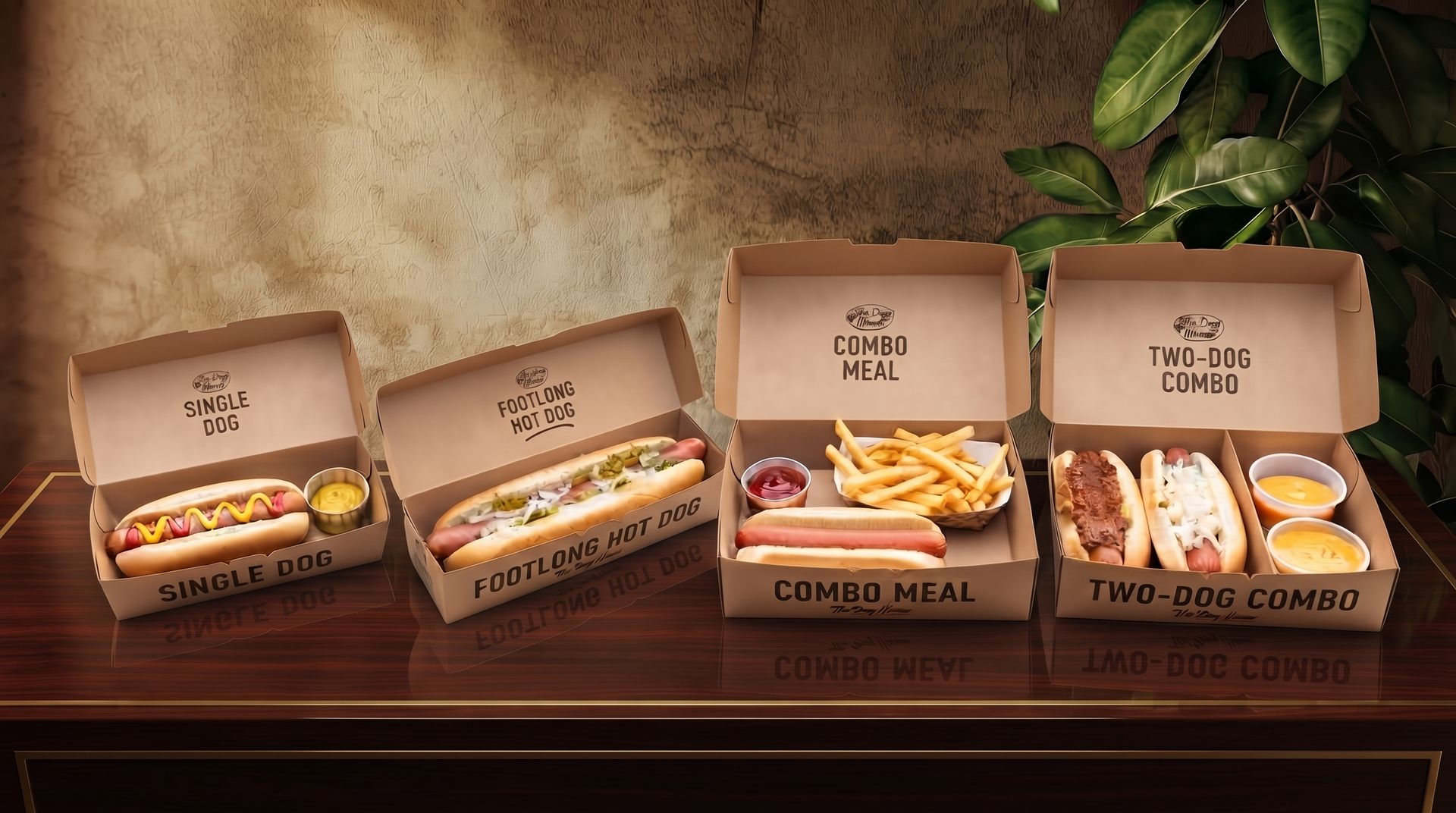
Hotdog boxes are sized around the dog and its toppings, not a single fixed standard. A tray that fits a plain mustard dog can crush a loaded chili-cheese build, and a box sized for a footlong swallows a standard dog so it rolls around. Getting the size right keeps the bun cradled, the toppings level, and the package looking deliberate rather than half-empty. This guide covers the common size classes and how the load and the travel change what you need.
Two measurements drive the choice: the bun footprint, which sets the length and width, and the topping load, which sets the depth and headroom. Start there, and the rest follows.
Who Orders by Size Class
Size preference tends to track the menu and the service:
Concession and venue operators: standard single-dog trays in high volume.
Footlong and specialty vendors: longer trays and sleeves for extended buns.
QSRs and chains running combos: two-dog and combo boxes with a side pocket.
Gourmet and loaded-dog concepts: deeper clamshells with headroom for heavy toppings.
Delivery-first kitchens: closed cartons sized to stack flat in a bag.
Caterers and event programs: bulk or multi-dog builds for trays that travel.
Match the size class to the heaviest build you serve, not the lightest. Compare formats on the food boxes listing.
Standard Single-Dog Trays and Clamshells
The everyday size is built around a standard bun, which runs roughly a 6 to 8 inch footprint. An open boat tray in this class is shallow because a plain dog needs little headroom, and it suits fast counter service where the dog is eaten right away. A single-dog clamshell in the same footprint adds a lid and a little depth so a dressed dog stays put, which matters once the dog leaves the counter. The difference between the two is containment, not length.
If the menu runs loaded dogs in the standard length, step up the depth rather than the footprint, so the toppings clear the closing lid without smearing.
Footlong Builds
A footlong dog and bun run roughly double the standard length, so the box has to support both ends or the bun sags and the toppings slide to the middle. Footlong trays and sleeves are sized long and narrow, and a footlong clamshell needs enough rigidity along its length that it does not flex when carried one-handed. Because the span is longer, board weight matters more here than on a short tray. Send the exact bun length, since footlong sizing varies between suppliers.
Two-Dog and Combo Boxes
Two-dog boxes sit two dogs side by side, which roughly doubles the width while keeping the standard length. Combo boxes add a pocket or compartment for a side portion next to the dog. The key dimension here is the divider or compartment fit, since a side that spills into the dog defeats the point. Specify whether you want a fixed compartment or an open well, and whether the side travels hot. See how combo formats sit alongside other fast food builds on the hotdog boxes.
How Toppings and Travel Change the Size
The dressed height of the dog is easy to underestimate. A bare dog sits low, but chili, cheese, slaw, onions, and a drizzle can add real height, and a closing lid has to clear all of it. When a box travels, add a little clearance so the toppings do not press against the lid and transfer onto it. When the dog is eaten on site, a snugger fit is fine. A coated board or greaseproof liner is worth specifying for loaded builds so the grease and sauce stay off the customer; grease resistance depends on the coating or liner, the sauce content, and how long the dog sits. Browse substrate weights on the materials catalog.
Box Styles by Size Class
Shallow open tray: standard plain dogs eaten on site.
Single-dog clamshell: standard dressed dogs that need containment.
Footlong tray or sleeve: extended buns that need end support.
Two-dog box: two dogs side by side for value service.
Combo box: a dog plus a side pocket for combo meals.
Deep gourmet clamshell: heavily loaded dogs with topping headroom.
Send your bun length, your heaviest dressed height, whether the order travels, and your target quantity, and we will recommend a size range with the right clearance.
Common Mistakes to Avoid
Sizing to the bare dog: a tray fit to a plain dog crushes a loaded one; size to the dressed height of the heaviest build.
Guessing the footlong length: footlong buns vary; send the exact length so the ends stay supported.
Skipping topping clearance on travel orders: toppings press into a tight lid in transit; add headroom when the dog rides in a bag.
Treating a combo box as one big well: a side that spills into the dog defeats the layout; specify a divider or compartment.
Underweighting a footlong board: a thin board flexes over the longer span; scale the board weight with the length.
Ordering one size for a mixed menu: a single size rarely fits standard, footlong, and combo dogs well; spec each size class you actually serve.
Order the Right Hotdog Box Size
Send your bun length, your heaviest dressed topping height, whether the order travels, and your target quantity, and we will recommend a size range and quote it. Standard production runs 10 to 14 business days after artwork approval. Reorders on locked artwork may reduce proofing time because the structure and artwork are already approved, but standard production remains 10–14 business days after artwork approval unless otherwise confirmed. Contact The Printing World at sales@theprintingworld.com or message us on WhatsApp at +16133831487. Coordinate finishing on the finishes page.
Need custom packaging for your product?
Get pricing, samples, and expert advice — no commitment required.