
Noodle Box Sizes & Styles: 8oz to 32oz Pails & Containers Guide
Noodle box sizes look simple until you match one to a brothy ramen and a drained stir-fry on the same menu. This guide breaks down the common 8oz to 32oz sizes, the pail and container structures they come in, and how to pick the right combination for counter, pickup, and delivery service.

Awais M · Custom Packaging Specialist
Awais M helps small and mid-sized brands get custom packaging right — the box style, the material, the print finish, and the order quantity that actually fits the budget.
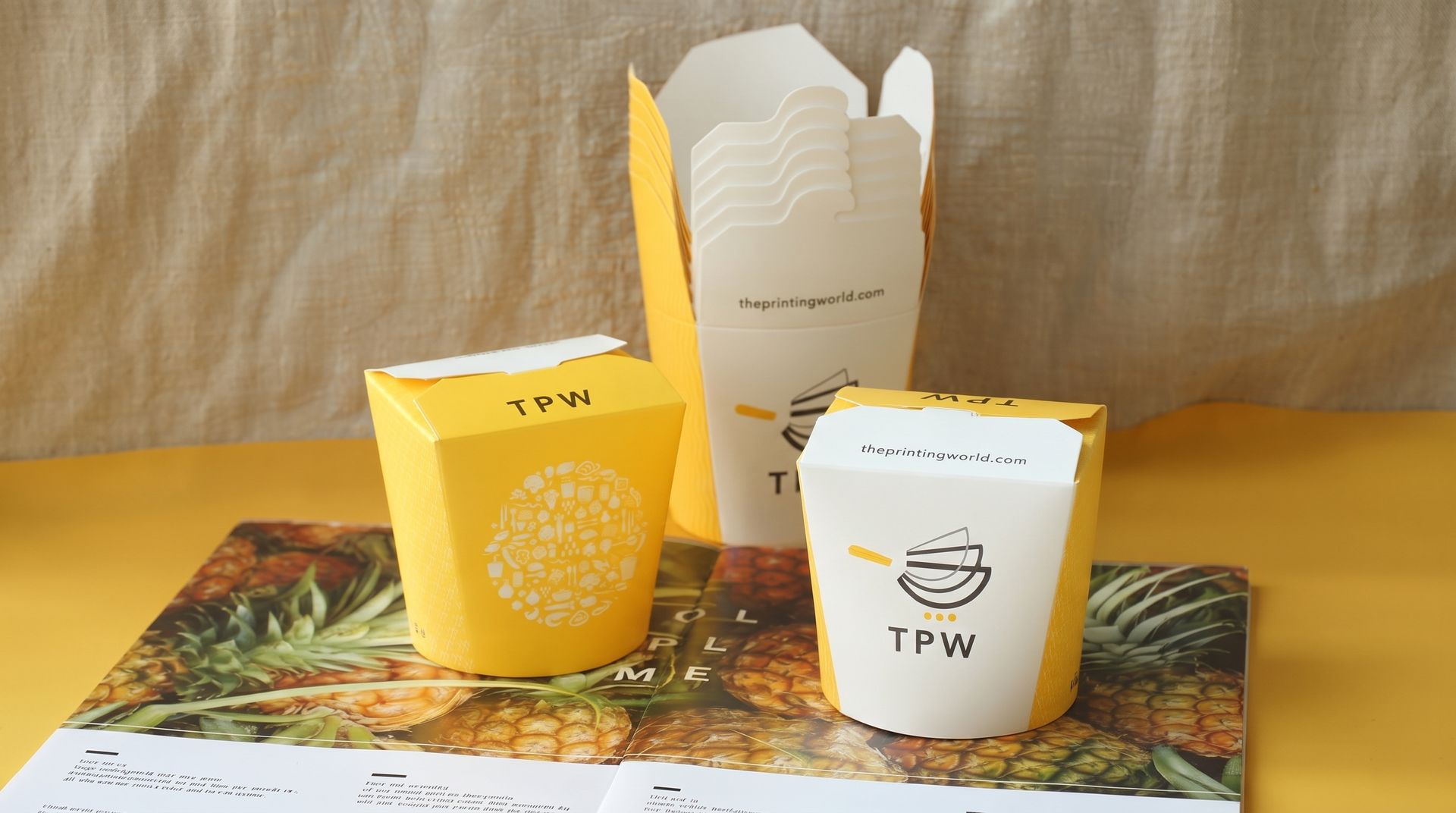
Noodle box sizes look simple until you try to match one to a brothy ramen and a drained stir-fry on the same menu. The capacity, footprint, and closure all shift with the portion and the way the box travels, and a size that fills cleanly at the counter can bulge or leak in a delivery bag. This guide breaks down the common noodle box sizes, the structures they come in, and how to pick the right combination for your service.
Common Noodle Box Sizes
Noodle pails run a familiar set of capacities, sized around the portion rather than a single standard:
8oz mini: a small box for sides, sauces, samples, and tasting portions, roughly a 2.75-inch footprint.
16oz: a mid-size box for a single side or a small entree, roughly a 3.5-inch footprint.
26oz standard: the everyday entree size for a full noodle portion.
32oz: a larger box for family portions or heavier loaded dishes, roughly a 3.5 by 4.5-inch footprint.
Some programs add a 12oz or 24oz step where the menu sits between the standard sizes. Treat these as planning footprints plus clearance rather than exact specs, and confirm the die and dimensions during quoting. Most kitchens run two or three sizes so the line can match the box to the portion. See the custom noodle boxes page for the current size range.
Box Styles and Construction Options
Size pairs with structure, and the closure matters as much as the capacity:
Folded pail (oyster-pail style): tuck-flap lids that close into one top, the everyday structure for drier noodle dishes.
Round container with lid: a fitted lid that seals brothy ramen and soupier dishes more reliably than folded flaps.
Pail with wire handle: a metal bail handle for walk-up carry on counter-pickup orders.
Pail with paperboard handle: an all-paper handle for brands that want to skip the metal part.
Handle-free pail: a flat-stacking box for delivery bags and faster lines.
Window pail: a die-cut window with film for display counters where the dish sells the portion.
Folded pails and window pails ship flat and set up on the line, while round containers nest for compact storage. The structure you pick narrows the size options, so choose them together.
Who Orders Each Size
Different operators settle on different size mixes based on how they serve:
Ramen shops: a 26oz or 32oz lidded container for the main bowl plus an 8oz mini for toppings or sauce.
Asian-cuisine restaurants: a 16oz and 26oz pair covers sides and entrees across pickup and delivery.
Ghost kitchens: a 26oz handle-free pail that stacks flat in a courier bag.
Food trucks: a 16oz pail that fills fast and fits a tight service window.
Caterers: a 32oz box for group portions and buffet lines.
Tasting and sampling stalls: an 8oz mini for small portions and event service.
Send your portion volumes in ounces, the brothy-versus-drier split on your menu, your pail or round-container preference, and target quantity, and we will recommend the size and structure mix. Compare related formats on the food packaging industry listing.
Matching Size to Barrier and Service
Size does not sit alone; it interacts with the barrier and the way the order travels. A 32oz lidded container holding a brothy bowl gives sauce more room to move on a delivery route, so it usually pairs with a poly-lined stock and a fill level that leaves headroom. A 16oz drained-noodle portion handed across a counter can run on a lighter coated pail because the moisture load and the transit time are both lower.
The closure matters at every size. A tuck-flap pail closes fast but is better suited to drier portions, while a fitted-lid round container holds liquid more reliably across the brothy sizes. When a single size has to cover both wet and dry dishes, the lidded container is usually the safer default. For the substrate side of the decision, see the custom materials catalog, and compare the format with the Chinese takeout boxes pail.
Common Mistakes to Avoid
Picking capacity without the footprint: two boxes can hold the same ounces with very different footprints, so confirm the die against your portion and bag.
Running one size for the whole menu: a single size drowns small sides and crushes full portions; match the size to the dish.
Using a tuck-flap pail for broth: a brothy dish can seep past folded flaps; move soupier dishes to a lidded round container.
Packing past the rim: overfilling makes the lid bulge and the seams strain; leave headroom for a clean close.
Ignoring delivery-bag stacking: a handled box adds bulk in a stacked bag, so confirm whether a handle-free box fits the route.
Treating planning footprints as exact specs: dimensions vary by die and supplier, so confirm measurements during quoting before you lock artwork.
Order the Right Noodle Box Size
Tell us your portion volumes, menu split, structure and handle preference, substrate, and target quantity, and we will spec the size range and quote it. Standard production runs 10–14 business days after artwork approval. Reorders on locked artwork may reduce proofing time because the structure and artwork are already approved, but standard production remains 10–14 business days after artwork approval unless otherwise confirmed. Contact The Printing World at sales@theprintingworld.com or message us on WhatsApp at +16133831487. For materials, see the finishing options.
Need custom packaging for your product?
Get pricing, samples, and expert advice — no commitment required.