
Custom Noodle Boxes for Restaurants, Ghost Kitchens & Food Trucks
A ramen shop, a ghost kitchen, and a festival stall all ask different things of the same noodle pail. This guide looks at how each operator uses custom noodle boxes, what each service model needs from the packaging, and how to match the structure, substrate, and print to the way the food leaves the kitchen.

Awais M · Custom Packaging Specialist
Awais M helps small and mid-sized brands get custom packaging right — the box style, the material, the print finish, and the order quantity that actually fits the budget.
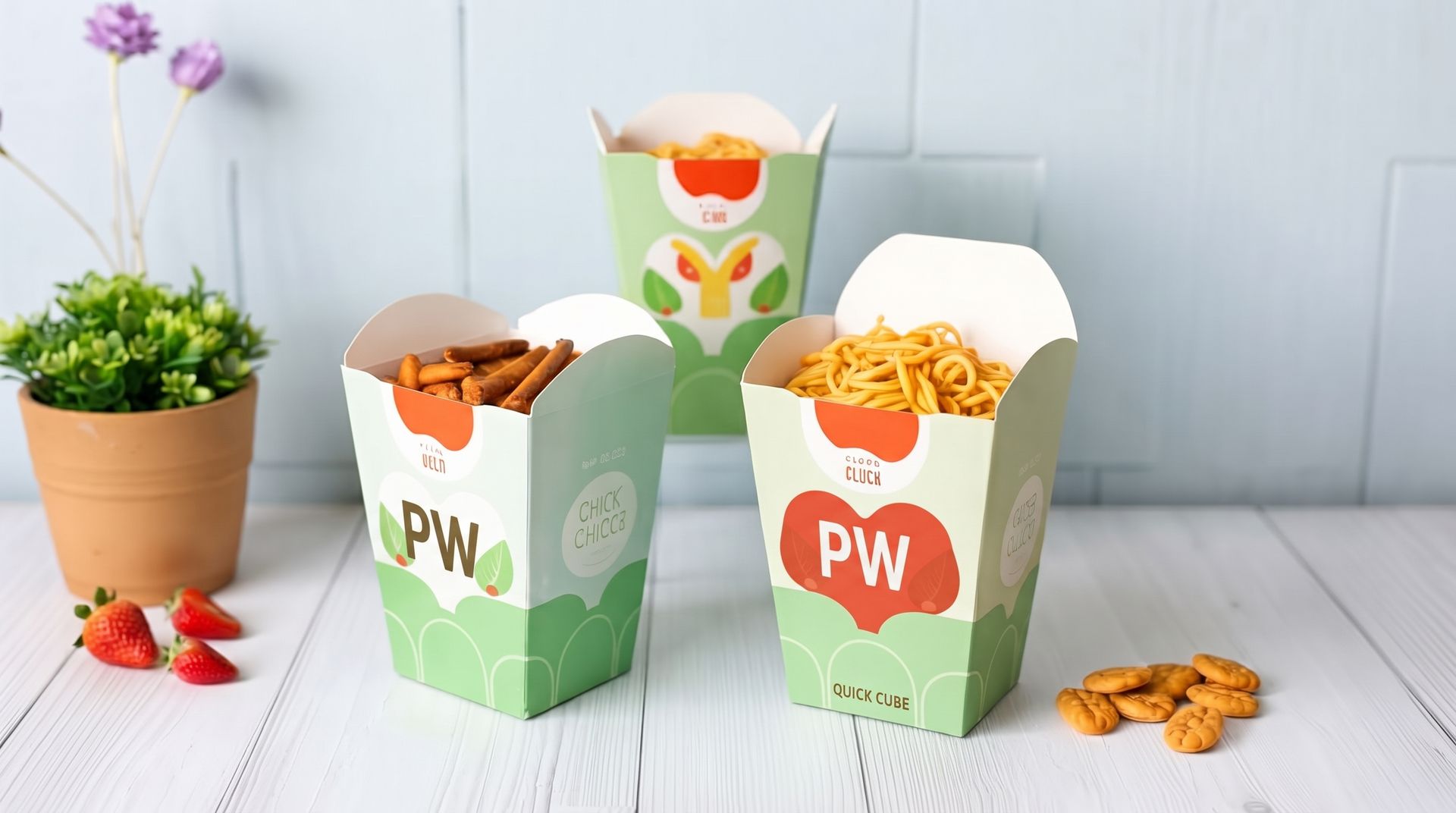
Noodle boxes have to fit the way each kitchen serves, and a ramen shop, a ghost kitchen, and a festival stall all ask different things of the same folded pail. This guide looks at how different operators use custom noodle boxes, what each service model needs from the packaging, and how to match the structure, substrate, and print to the way the food actually leaves the kitchen.
The dish sets the barrier and the service model sets the structure. A brothy bowl on a delivery route is a different spec from a drained stir-fry handed across a counter, even when both are called a noodle box. Getting the match right is what keeps the order clean in the bag and the brand sharp on the shelf.
Who Orders Custom Noodle Boxes
Printed noodle packaging shows up across the food-service map, and each operator leans on it differently:
Ramen shops and noodle bars: lidded containers for brothy bowls and pails for drier dishes, branded to match the dine-in room.
Asian-cuisine restaurants: printed pails for lo mein, chow mein, and stir-fry sides across pickup and delivery.
Ghost kitchens and delivery brands: brand-forward boxes that carry the whole presentation when there is no storefront.
Food trucks and street-food vendors: compact pails that fill fast and stack at a tight service window.
Caterers and event programs: standardized boxes for buffets and group delivery.
Festival and night-market stalls: grab-and-go pails printed for the occasion and easy to carry through a crowd.
Office-lunch and canteen programs: tidy single-portion boxes for high-volume midday service.
Meal-prep and subscription brands: repeatable portion boxes that hold up through a courier handoff.
Across all of them, the printed box turns a takeaway portion into a brand impression. Compare related formats on the food packaging industry listing and the Chinese takeout boxes page.
Construction Options by Service Model
The service model points to the structure more than the cuisine does:
Counter pickup: a folded pail with a wire or paperboard handle carries cleanly for walk-up orders.
Delivery-heavy programs: a poly-lined, handle-free pail stacks tighter in a courier bag and resists leaks in transit.
Brothy menus: a round container with a fitted lid holds liquid more reliably than a tuck-flap top.
Display counters: a window pail lets the dish show where presentation sells the portion.
Catering lines: a larger pail or container standardizes portions for buffets and group orders.
Sampling and tastings: an 8oz mini pail suits sides, sauces, and small tasting portions.
Most programs settle on two structures and two or three sizes so the line can match the box to the order without slowing down.
Matching the Box to the Dish
A noodle box that holds hot, saucy food needs the right barrier, and the dish decides it. A brothy ramen leans toward a poly-lined container or a liner, while a drained lo mein can run on a lighter coated pail. The substrate should be food-contact-appropriate for the intended use, so confirm food-contact requirements during quoting rather than after the run. A coated surface may help with light surface protection depending on the coating, liner, food type, and contact duration.
Send your menu mix (brothy versus drier dishes), portion volumes, service model, and target quantity, and we will recommend the structure, substrate, and size mix.
Branding That Travels
For delivery and ghost-kitchen brands, the box is the only physical touchpoint the customer gets, so the print carries more weight. Full-color art on white board holds brand color and food photography, while one- or two-color printing on kraft keeps a clean logo at a lower cost. A QR code or social handle on the panel links the takeaway order back to reviews and reorders. A consistent printed box across pickup, delivery, and dine-in keeps the brand recognizable wherever the order lands, which is what repeat customers remember when they reorder. See the printing and finishing options to compare print surfaces and finishes.
Common Mistakes to Avoid
Using one structure for the whole menu: a tuck-flap pail that works for stir-fry may seep with broth; split the menu between pails and lidded containers.
Sizing every dish the same: a single size drowns small sides and crushes full portions; run two or three sizes matched to the menu.
Skipping the barrier check for delivery: a longer courier route gives sauce more time to soak in, so match the substrate to transit time, not just the dish.
Treating food-contact suitability as a given: confirm the coating or liner is food-contact-appropriate for the intended use during quoting.
Over-ordering one print run: plan quantities around forecast demand, reorder risk, storage limits, and the cost of missing the buying window.
Forgetting the handle on a delivery line: a wire handle adds bulk in a stacked bag, so a handle-free pail often runs cleaner for delivery.
Order Noodle Boxes for Your Kitchen
Tell us your service model, menu mix, portion sizes, structure and handle preference, substrate, branding, and target quantity, and we will spec the program and quote it. Standard production runs 10–14 business days after artwork approval. Reorders on locked artwork may reduce proofing time because the structure and artwork are already approved, but standard production remains 10–14 business days after artwork approval unless otherwise confirmed. Contact The Printing World at sales@theprintingworld.com, or message us on WhatsApp at +16133831487. Browse more formats: sushi boxes, tofu boxes, or nachos boxes.
Need custom packaging for your product?
Get pricing, samples, and expert advice — no commitment required.
Industries