
Truffle Boxes for Chocolatiers: Building a Box Range
For a chocolatier, the truffle box is where the brand, the assortment, and the price point meet the customer. This guide covers who orders truffle boxes, the builds that fit a maker's range, and the spec choices that keep an assortment seated and on brand.

Awais M · Custom Packaging Specialist
Awais M helps small and mid-sized brands get custom packaging right — the box style, the material, the print finish, and the order quantity that actually fits the budget.
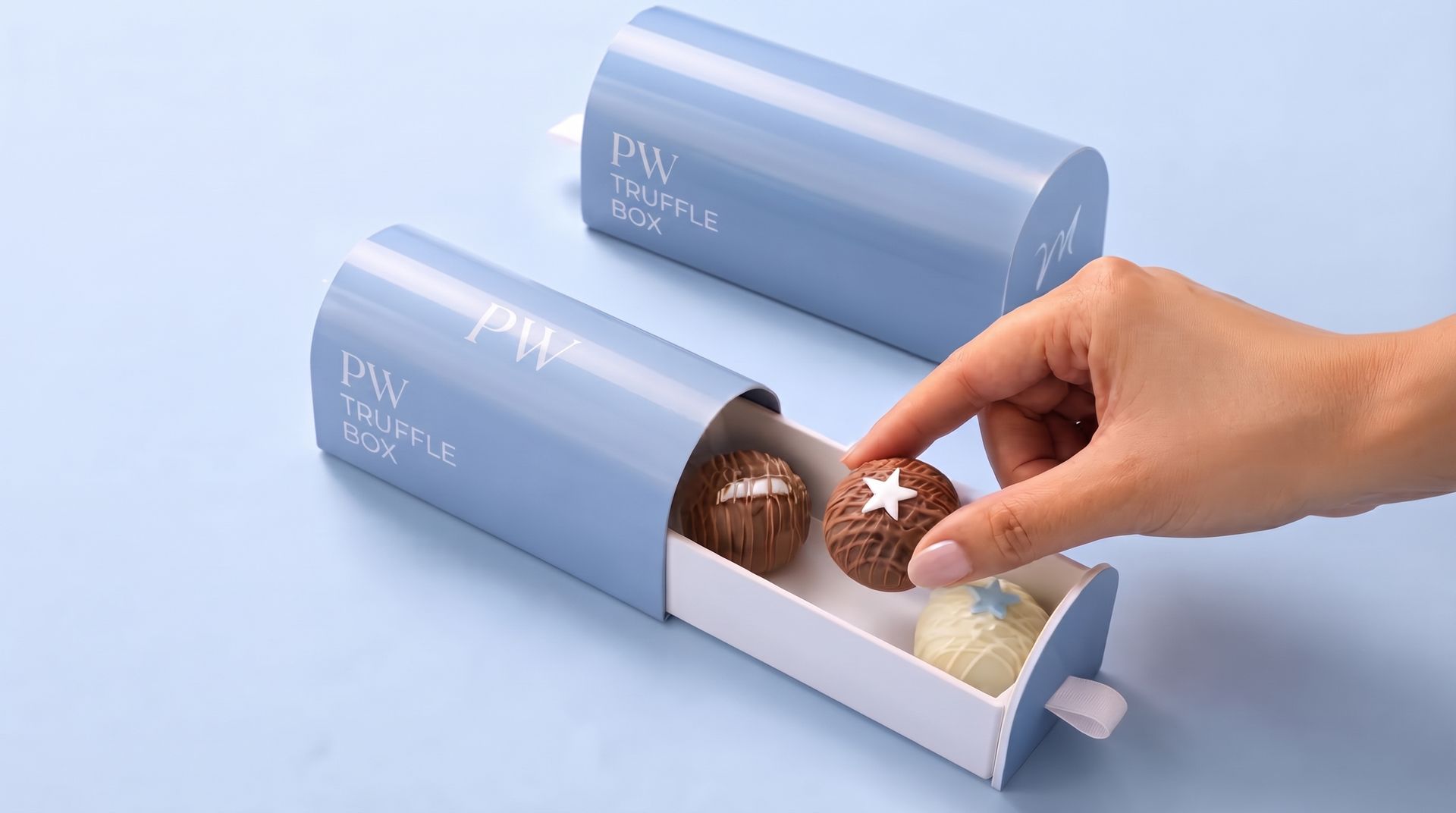
Why Chocolatiers Spec Their Own Truffle Boxes
A truffle is a gift before it is a snack, and the box does a lot of the presenting. For a chocolatier, the carton is where the brand, the assortment, and the price point all meet the customer at once. A stock box rarely carries a maker's name or seats a particular piece, so most chocolatiers move to a custom build once the line is set.
The decision is rarely about a single box. A chocolatier usually runs a small range, a four-piece favor, a nine-piece gift, and a twelve-piece assortment, and wants them to read as one line. This article covers who orders truffle boxes, the builds that fit a maker's range, and the spec choices that keep an assortment seated and on brand.
Who Orders Truffle Boxes for a Confectionery Line
The buyers behind a truffle program tend to share a goal: present a delicate confection as a gift while keeping a consistent brand across counts. Common buyers include:
Independent chocolatiers building a signature assortment box with a seated cavity tray
Confectionery brands rolling a truffle line across retail with a consistent carton family
Cafes and dessert bars selling a small favor count at the counter alongside the menu
Gift and hamper companies dropping a truffle box into a larger curated gift
Event and wedding planners ordering favor counts in a themed run for a single date
Corporate gifting programs sending branded assortments to clients during the holidays
Each of these leans on a slightly different build, but they share the same need for a seated insert and a clean printed panel. Browse the food packaging industry page to see how a truffle box sits within a wider confectionery range.
Box Styles That Fit a Maker's Range
A chocolatier's range usually maps onto three or four structures, each matched to a count and a price point:
Sleeve-and-tray pull-out: a printed sleeve over a slide-out tray, a clean fit for a four- or eight-piece favor
Two-piece rigid lid-and-base: a substantial gift box for nine- and twelve-piece assortments, with a lid that lifts to reveal the seated pieces
Window box: a folding or rigid build with a die-cut window that previews the dusted truffles at the shelf
Folding tuck carton: a flat-folding box for retail counts that need to set up fast and ship economically
Most makers run a sleeve-and-tray for the small favor and a rigid box for the gift counts, so the line reads as one family with one print treatment. Compare the builds on the bakery boxes category listing and match the structure to each count.
Keeping the Assortment Seated and On Brand
The cavity insert is what separates a truffle box from a plain carton. A paperboard divider grid or a molded tray seats each piece in its own pocket so the truffles do not roll, touch, or smear the dusted finish in transit. The pocket is matched to the piece diameter, so a maker running a 40 mm truffle gets a cavity cut for it rather than a generic well.
On brand, the print does the rest. A maker's name, a flavor map printed inside the lid, and a foil mark on the front panel turn the box into part of the product. The finishes catalog shows how foil, embossing, and spot UV read on a rigid lid. Confirm the cavity and the print together so the seated assortment and the branded panel match the line.
Food Contact and Presentation
A truffle sits in its cavity, so the insert and any liner are matched to direct contact. The substrate and insert are food-contact-appropriate depending on the liner or tray you choose, so a dusted ganache piece is matched to the right inner barrier rather than assumed. Many makers run a glassine liner or a paper cup so the piece never sits on the print board, and a molded tray adds a wipeable seat for a softer center. The packaging materials catalog covers the board and barrier options behind each build.
Common Mistakes to Avoid
Treating every count the same: a four-piece favor and a twelve-piece gift need different footprints. Spec a size per count rather than forcing one box.
Skipping the cavity tray on a gift box: loose truffles roll and knock in transit. Seat each piece in a pocket matched to the diameter.
Letting the print board touch the truffle: the panel is not a barrier. Add a liner or tray so the build is food-contact-appropriate.
Over-finishing a retail carton: heavy foil on a fast-moving counter box adds cost without a gift context. Save the accents for the rigid gift build.
Mismatched print across the range: a favor and a gift box that look unrelated weaken the line. Run one print treatment across the family.
Filling the box past capacity: a packed lid presses the dusted finish. Size up rather than overfill.
Order Truffle Boxes for Your Line
Send your truffle counts and diameter, the box styles across your range, window and insert choices, liner needs, substrate, and branding to The Printing World at sales@theprintingworld.com, or +16133831487. Our team will review the line and provide a quote and proofing guidance once the specifications are confirmed. Standard production runs 10–14 business days after artwork approval. Reorders on locked artwork may reduce proofing time because the structure and artwork are already approved, but standard production remains 10–14 business days after artwork approval unless otherwise confirmed.
Need custom packaging for your product?
Get pricing, samples, and expert advice — no commitment required.
Industries