
Yellow Cereal Boxes: Who Orders Them & Why
A yellow scheme reads warm, cheerful, and appetite-forward, which is why so many breakfast brands reach for it. This guide walks through who orders yellow cereal boxes, how lemon, golden, and muted yellows tell different stories, and how to match the build to the channel.

Awais M · Custom Packaging Specialist
Awais M helps small and mid-sized brands get custom packaging right — the box style, the material, the print finish, and the order quantity that actually fits the budget.
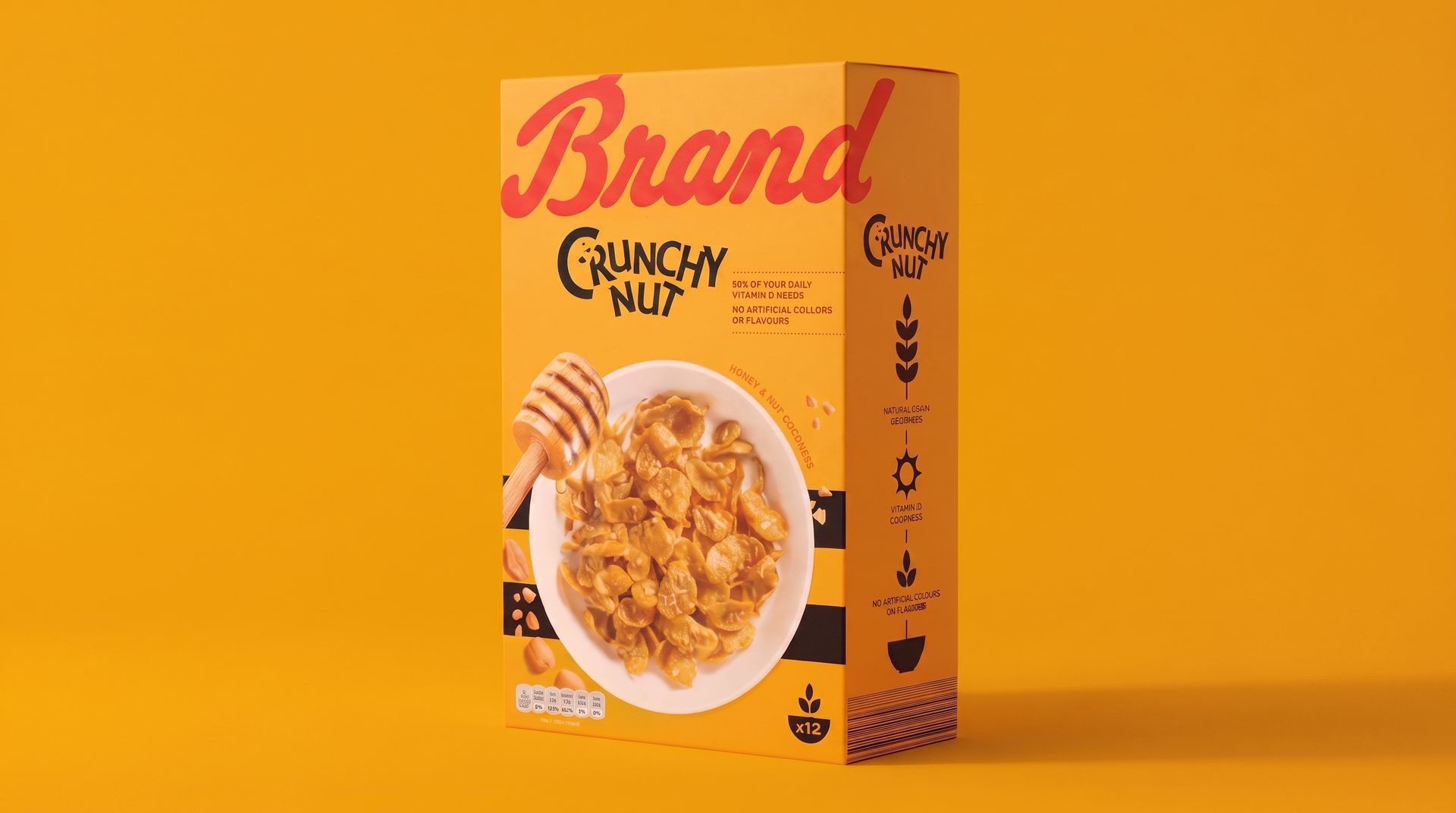
Why Brands Reach for a Yellow Cereal Box
Yellow does a specific job on a shelf. It reads warm and cheerful, it registers fast, and it leans appetite-forward, so brands reach for it when they want a friendly, energetic first impression rather than a cool or austere one. For a breakfast product, that warmth maps neatly onto comfort and morning energy, which is why so many sunny, sweet, and family-facing recipes land on a yellow scheme.
One structural point shapes every program below. The printed carton is a secondary packaging layer, and the cereal sits inside a sealed inner liner bag made from a food-contact-appropriate film that holds freshness. That keeps the outer board free to commit to a bold yellow. See the cereal boxes for related printed formats.
Who Orders Yellow Cereal Boxes
The buyers span retail, marketing, and events, and each specs the box a little differently:
Challenger and direct-to-consumer cereal brands using a yellow scheme to read warm and approachable against legacy boxes, both on the shelf and in product photos
Kids and family brands pairing cheerful yellow with back-panel games and characters to win younger shoppers
Honey, corn, and banana recipe makers matching a warm golden yellow to a sweet, sunny flavor story
Granola and wholesome-positioned brands using a softer, muted yellow to signal natural and earthy
Novelty and limited-edition sellers running yellow seasonal or tie-in art on short editions
Marketing and promotional teams matching a yellow carton to a campaign, mascot, or event palette
Hotels, cafes, and hospitality groups ordering single-serve yellow boxes for breakfast service
Event and party planners handing out single-serve yellow boxes at themed tables
If you sell across more than one of these channels, the food packaging page shows related food-service formats worth aligning.
Matching the Yellow to the Story
The same color family can say different things depending on the shade. A clean lemon yellow feels crisp, modern, and value-friendly, which suits a challenger brand trying to look current. A rich golden yellow feels warm and indulgent, which fits honey and sweetened recipes. A softer, muted yellow reads wholesome and calm, which works for granola and better-for-you positioning. Choosing the shade is really choosing the story, so it is worth deciding before the design begins.
Yellow also pairs well with a single strong accent. A deep navy, a warm red, or a clean white logo all hold up against a yellow field, and the accent is usually what carries the readable text. Browse the material guide to see how the board under the ink affects which yellow you can hit.
Yellow Across a Flavor Range
Many brands do not sell one cereal, they sell a line, and yellow can either tie that line together or pull it apart. One common approach keeps a single signature yellow on every box and varies a secondary accent color per flavor, so the range reads as one family while each variant stays findable. Another approach shifts the yellow itself, a cool lemon for a lighter flavor and a warm golden for a sweeter one, which signals the recipe at a glance but asks more of the print plan to keep each shade consistent. There is no single right answer, but deciding the system before designing the first box saves redoing the others later. Whichever route you take, hold each yellow with a proof so the family still looks intentional after a few reorders.
Box Styles and Construction Options
Different channels favor different builds, so the style follows the portion and the display:
Reverse tuck-end carton the retail workhorse with broad front and back panels for a full yellow field
Straight tuck-end carton a clean-front option for a simpler face
Auto-bottom carton a pre-glued base that snaps square under heavier family fills
Seal-end carton glued top and bottom for tamper-evident, machine-filled retail runs
Window carton with a die-cut opening so a yellow border frames the cereal inside
Single-serve snack carton a small footprint for hospitality, samplers, and on-the-go
Common Mistakes to Avoid
Picking yellow without picking a shade. Lemon, golden, and amber tell different stories, so match the shade to the brand before designing.
Letting yellow carry the text. Low contrast hurts legibility, so use a darker accent for type and the yellow for the field.
One yellow across unrelated SKUs. If two products need to look distinct, a shared identical yellow can blur them, so vary the accent or shade deliberately.
Forgetting the channel. A hospitality single-serve and a retail family box have different footprints, so spec the size to the channel.
Skipping a board proof. A warmer board can dull a clean yellow, so proof on the real substrate.
Treating the printed box as the freshness barrier. The inner liner holds freshness; the carton carries the color and branding.
Request a Quote on Yellow Cereal Boxes
Tell us where the box will sell and how it will be filled, and we will help match the build and the yellow to the channel. Share the fill size, the carton style, the cereal type for the inner liner, the exact yellow you want, and your target quantity. Minimum order quantity starts at 100 units. Reorders on locked artwork may reduce proofing time because the structure and artwork are already approved, but standard production remains 10–14 business days after artwork approval unless otherwise confirmed. Reach The Printing World at sales@theprintingworld.com, or message +16133831487 to get started. You can also browse custom boxes for wider packaging options.
Need custom packaging for your product?
Get pricing, samples, and expert advice — no commitment required.