
Custom Dessert Boxes for Bakeries, Caterers & Delivery Brands
The right dessert box depends on how you sell. This guide maps bakeries, dessert bars, caterers, hotels, and delivery brands to the box styles and features that matter for each, so you can spec from your service model instead of a generic catalog.

Awais M · Custom Packaging Specialist
Awais M helps small and mid-sized brands get custom packaging right — the box style, the material, the print finish, and the order quantity that actually fits the budget.
Why Dessert Boxes Vary So Much by Business
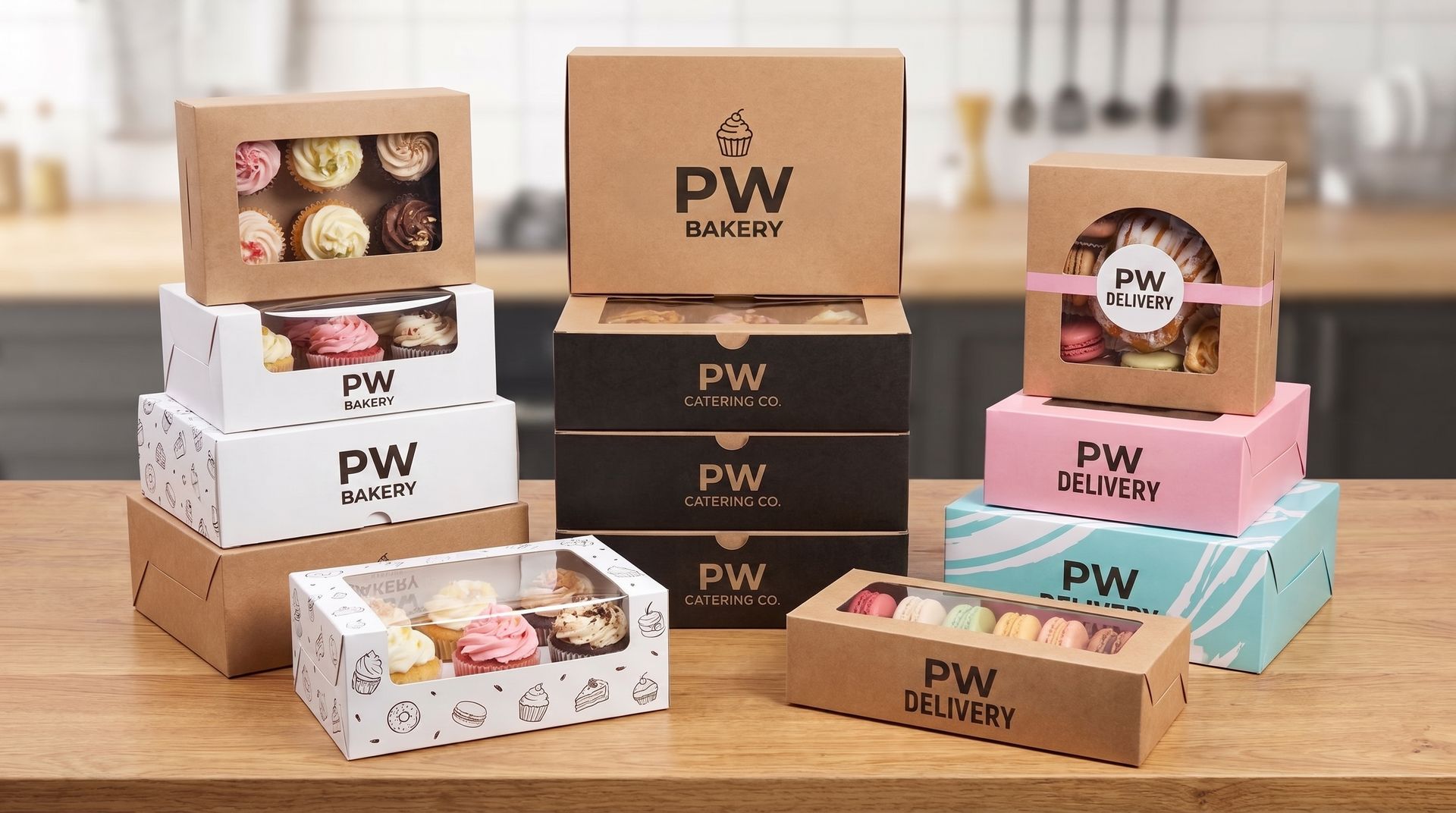
The same product name covers very different boxes once you look at who is ordering. A walk-in bakery wants a carton that packs fast at the counter, a caterer wants a wide box that presents a full spread, and a delivery brand wants a carton that survives a carrier journey. Matching the build to the business is the difference between a box that works and one that looks right but fails in service.
This guide maps the main dessert-selling businesses to the box features that actually matter for each, so you can spec from your service model rather than from a generic catalog. For the full product range, see dessert boxes and the wider bakery boxes.
Who Orders Custom Dessert Boxes
The buyer set spans retail, catering, hospitality, and shipping. Common buyers include:
Independent bakeries and patisseries: branded boxes for a mixed order carried home.
Dessert bars and specialty sweet shops: window boxes that double as retail display.
Cafes and coffee shops: grab-and-go cartons for the case and weekend pickups.
Caterers and event planners: platter-style boxes for weddings, parties, and corporate events.
Dessert delivery and DTC brands: mailer-style cartons with inserts for shipping.
Hotels and banquet programs: standardized to-go boxes across room service and events.
Restaurants: takeout boxes for house desserts.
Corporate and holiday gift programs: presentation boxes for seasonal sends.
Box Styles by Service Model
Each business leans toward a different structure, and the style follows the way the order is handed over:
Counter retail: single-serve and four- or six-count tuck-end cartons that pack quickly.
Display-led sweet shops: window display boxes that preview the assortment.
Catering and events: platter-style boxes and two-piece lid-and-base presentations.
Gift programs: rigid-leaning two-piece boxes with finishing for a polished send.
Delivery and subscription: mailer-style cartons with a secure closure and insert.
Hospitality: standardized cartons sized to a fixed service portion.
Picking the style from the service model keeps the box practical. A counter box that takes ten seconds to assemble matters at volume, while a gift box can afford a slower, more deliberate setup.
Matching Features to the Program
Beyond the base style, a few features track closely to the business. Caterers value a secure base and a flat presentation surface; delivery brands value an insert that immobilizes the assortment and a board that handles transit; sweet shops value a clean window and appetizing print. If you run more than one channel, it often pays to standardize on one carton family and vary the size and insert rather than running unrelated boxes. To scope your program, send your channel mix, piece count per box, insert requirement, and target quantity. Browse other formats: cupcake boxes, cake boxes, or pancake boxes.
Food Contact and Service Notes
A box that holds a fresh dessert needs the right inner barrier for anything that touches the board. The material should be appropriate for the intended food-contact application, and many programs add a liner or coated interior so the print board stays separate from direct contact. Grease resistance varies by the coating, the liner, the dessert composition, and how long the product sits in the box, so confirm your food-contact requirements during quoting. Plan storage so the flat blanks stay dry and square before they are set up and filled.
Transport vs. Display: Two Different Boxes
One distinction trips up multi-channel sellers: a box that displays well is not always a box that travels well. A window display box is built to be seen on a shelf or counter, where the priority is a clean preview and appetizing print. A transport box, by contrast, is built to immobilize the assortment and absorb handling, where the priority is a secure closure, an insert, and a board with enough caliper to hold square. The corrugated and heavier paperboard builds are the workhorses for moving an order, while lighter window cartons earn their place at the point of sale.
If you both display and ship, it usually pays to run two configurations on one carton family rather than forcing one box to do both jobs. Confirm your substrate options against each use on the materials catalogue, and we will help you split the program cleanly.
Common Mistakes to Avoid
Buying a retail box for a delivery program: a counter carton may not survive transit. Use a mailer-style box with an insert when the order ships.
Ignoring assembly speed at volume: a fiddly box slows a busy counter. Choose a quick tuck-end or auto-style build for high-throughput service.
Running unrelated boxes across channels: it multiplies dies and inventory. Standardize one carton family and vary size and insert where possible.
Over-sizing the catering box: a half-empty platter box lets pieces slide. Size the footprint to the spread you actually serve.
Skipping the food-contact conversation: assuming the board is a barrier. Confirm whether desserts touch the board and add a liner where needed.
Forgetting seasonal lead time: gift programs spike around holidays. Plan seasonal quantities around forecast demand, reorder risk, storage limits, and the cost of missing the buying window.
Order Custom Dessert Boxes for Your Business
Tell us your business type, channel mix, piece count per box, window and insert needs, substrate, branding, and target quantity, and we will match the build to how you serve. Contact The Printing World at sales@theprintingworld.com, or +16133831487, and explore related formats on the food packaging page.
Standard production runs 10–14 business days after artwork approval. Reorders on locked artwork may reduce proofing time because the structure and artwork are already approved, but standard production remains 10–14 business days after artwork approval unless otherwise confirmed.
Need custom packaging for your product?
Get pricing, samples, and expert advice — no commitment required.
Topics
Industries