
Die Cut Boxes for Retail Display: Shelf-Ready Packaging Guide
Die cut boxes for retail display engineer shelf-ready features directly into the box construction — hanger tabs, display windows, integrated handles, and shaped outlines that catch attention on shelf. This guide walks through how die cut boxes are commonly spec'd across retail brands, cosmetics, gift programs, indie food, apparel, electronics accessory, promotional events, tradeshow exhibitors, ecommerce, and corporate gift programs.

Awais M · Custom Packaging Specialist
Awais M helps small and mid-sized brands get custom packaging right — the box style, the material, the print finish, and the order quantity that actually fits the budget.
Why Retail Display Drives Die Cut Decisions
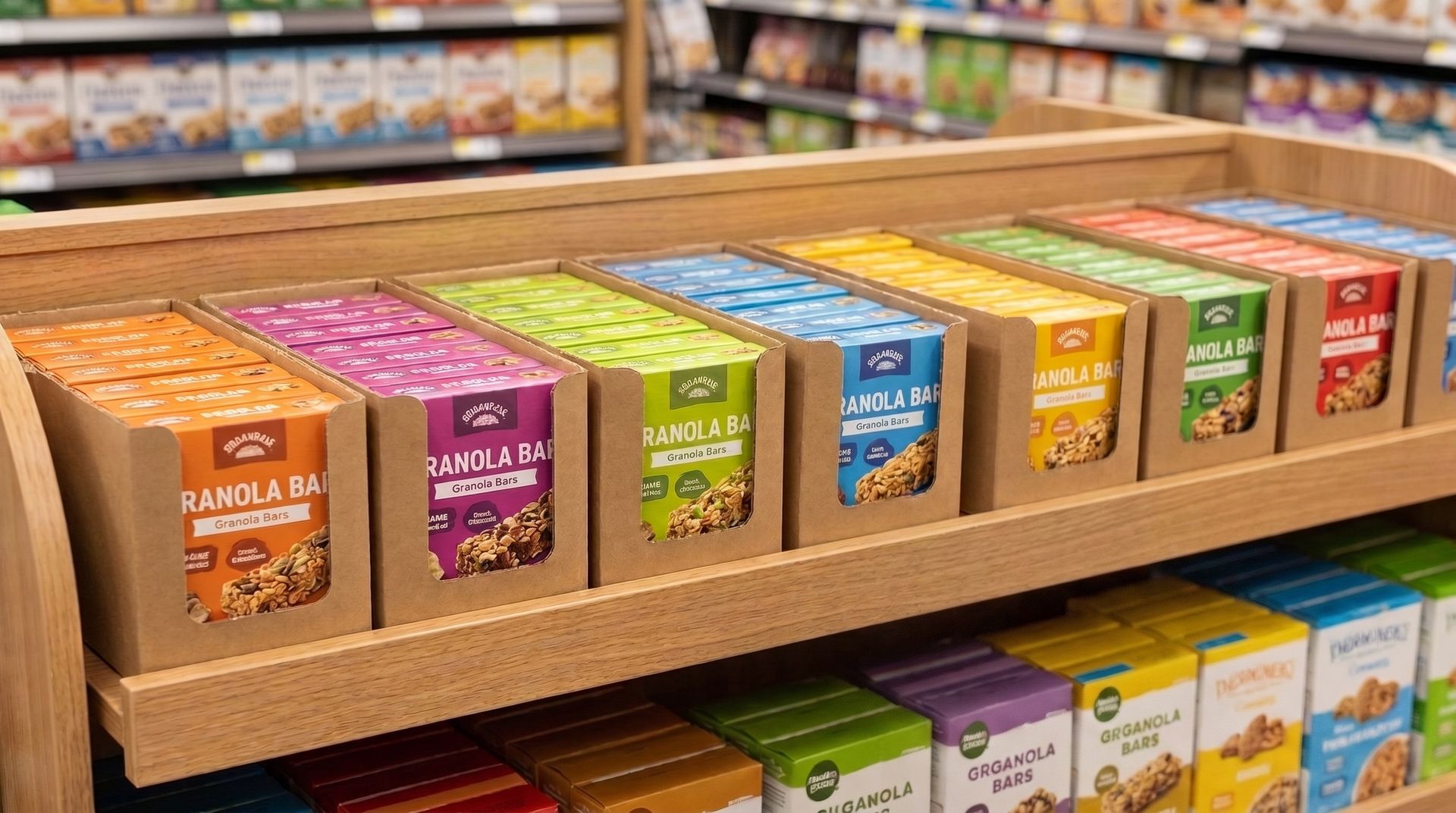
Die cut boxes for retail display compete on shelf for customer attention. Die cut boxes for retail display engineer features beyond standard rectangular boxes — retail display boxes compete for shelf attention. Die cut boxes for retail display engineer shelf-ready features directly into the box construction — hanger tabs, display windows, integrated handles, and shaped outlines that catch the customer's eye. The die cut is a retail-merchandising decision more than a visual decoration.
This guide walks through how die cut retail display boxes are commonly spec'd across the broader buyer set.
Who Orders Die Cut Retail Display Boxes
Custom die cut box buyers include retail brands needing distinctive shelf presence, cosmetics and beauty brands packaging products in shaped containers, gift and subscription brands using die cut shapes for branded reveal, indie food brands packaging specialty items in shaped containers, apparel and accessory brands with shaped retail packaging, electronics accessory brands needing die-cut inserts and outer cartons, promotional and event programs handing out shaped packaging, tradeshow and exhibition exhibitors using die cut as conversation starters, ecommerce brands running unboxing-driven DTC programs, and corporate gift programs handling shaped gift containers.
Box Styles for Retail Die Cut Display
Die cut display boxes: shelf-ready merchandising boxes with die-cut features for retail display
Die cut hanger boxes: die-cut hanger tabs for peg-display retail merchandising
Die cut window display boxes: shaped window die cuts revealing the product on shelf
Shelf ready die cut boxes: SRP construction with die-cut tear-strips and shelf-display panels
Point of sale die cut boxes: counter-display construction with die-cut shapes for impulse-purchase positioning
Retail merchandising boxes: floor-display and end-cap construction with die-cut shapes
Branded retail die cut boxes: custom die-cut shapes printed with brand artwork for branded retail positioning
Custom retail display boxes: bespoke die-cut shapes engineered for the specific retail channel and merchandising context
Retail Die Cut Packaging in Context
Retail buyers usually arrive with three overlapping needs: a shelf-ready outer that ships the unit safely, a die cut window or aperture that exposes the product or hero color, and a printed face that holds its own next to neighboring SKUs. The right spec balances those three rather than maximizing any single one.
Wholesale rollouts tend to standardize on a small set of approved structures across a category — one mailer dieline for online, one shelf-ready tray for store, and one peg-hung carton for endcap. That makes reorders predictable and keeps the artwork team from rebuilding dielines every season.
Hanger Tabs and Peg Display
Die cut hanger boxes use die-cut hanger tabs (typically euro-slot, sombrero, or J-hook shapes) that hang from retail pegboard or wire fixtures. Common hanger tab considerations include the hanger tab shape matching the retailer's fixture system, tab strength supporting the product weight, tab reinforcement (typically die-cut around a thicker substrate area), and tab placement coordinated with brand artwork for shelf presence.
For die cut retail display boxes, send the product, retail channel, display fixture type, and target quantity before quoting.
Display Windows on Die Cut Boxes
Die cut window display boxes combine shaped outer construction with die-cut window panels. The window die reveals the product on shelf — customers see what they're buying before they pick the box up. Common considerations include window shape coordinating with the outer die-cut shape, window film alignment with the die opening, window placement on the retail-facing panel (typically the front), and window size proportioned to the product's most visible feature.
Shelf-Ready Packaging Features
Die-cut tear strips: easy-open tear strips for retail shelf-stocking
Die-cut handles: integrated handles for customer carry-out
Die-cut display panels: shelf-fronting panels that lift to display the product
Die-cut hanger tabs: peg-display tabs for fixture hanging
Die-cut window panels: product-visibility windows for shelf appeal
Die-cut stacking notches: aligned cuts for clean retail stacking
Retail Channel Considerations
Different retail channels have different die-cut display preferences. Common channel considerations include mass-market retail (typically SRP shelf-ready boxes with tear-strips and display panels), specialty retail (often die-cut window boxes for product visibility), peg-fixture retail (die-cut hanger boxes with euro-slot or sombrero tabs), counter-display retail (point of sale die cut boxes for impulse purchases), and end-cap or floor-display retail (custom retail display boxes with shaped outer construction). Match the die cut features to the channel. Die cut packaging for retail rollouts typically benefits from channel-by-channel die-cut variation.
Common Mistakes to Avoid
Hanger tab shape mismatched to retailer fixture: different retailers use different peg-fixture systems. Confirm fixture type before specifying tab shape.
Display window too small for product visibility: if the window's purpose is showing the product on shelf, size the window proportionate to the product.
Tear-strip placement disrupting brand artwork: coordinate tear-strip die-cuts with brand artwork to keep the strip visually clean.
Forgetting substrate strength for hanger tabs: hanger tabs carry product weight. Confirm substrate weight and tab reinforcement.
SRP panel without channel confirmation: shelf-ready features only work if the retail channel supports SRP. Confirm channel before specifying.
Skipping prototype rounds for first retail runs: request a die cut box prototype to validate display features before full production.
Substrate and Material Considerations
Custom custom die cut boxes commonly use kraft paperboard for natural artisan positioning, SBS coated paperboard for full-color retail printing, corrugated (E-flute or B-flute) for heavier construction and shipping cartons, and rigid chipboard for upscale gift-positioned programs. Recycled-fiber substrate may be available depending on supplier availability and the program's sustainability positioning. Confirm substrate and supplier specifications during quoting before artwork approval.
Sizing and Capacity Considerations
Sizing for custom custom die cut boxes depends on the product's dimensions, count per box, and any insert or divider requirements. Common considerations include product dimensions and clearance for handling, multi-pack count and arrangement, insert or tray requirements, retail shelf or display constraints, and any stacking or shipping configuration. Send precise product dimensions during quoting so the box is sized around the actual product.
Design, Print, and Finishing Options
Custom die cut soap boxes typically use offset litho printing for full-color brand artwork with digital as an alternative for shorter runs. Common finishing options include matte or gloss lamination, spot UV accents on brand marks, foil stamping for upscale positioning, embossing or debossing on brand logo, and edge treatments where appropriate. Discuss finish placement during quoting to coordinate with structural decisions.
Order Custom Die Cut Boxes
Send the product type, custom die shape concept, dieline reference if available, substrate preference, expected print and finishing direction, retail channel, prototype requirement (first run), and target quantity to The Printing World. Our team will review the details and provide quote and proofing guidance after the specifications are confirmed. Contact us through sales@theprintingworld.com, or +16133831487.
Standard production runs 10–14 business days after artwork approval. Reorders on locked artwork may reduce proofing time because the structure and artwork are already approved, but standard production remains 10–14 business days after artwork approval unless otherwise confirmed.
Need custom packaging for your product?
Get pricing, samples, and expert advice — no commitment required.
Industries