
Earring Box Sizes and Styles: Studs, Drops, and Hoops
Earring box sizing is not a single standard. A stud, a long drop, and a hoop each need a different footprint, depth, and insert so the pair sits level and clear of the lid. This guide covers how to measure, how each format sizes, and which box style fits the pair.

Awais M · Custom Packaging Specialist
Awais M helps small and mid-sized brands get custom packaging right — the box style, the material, the print finish, and the order quantity that actually fits the budget.
Why Earring Box Sizing Is Not One Standard
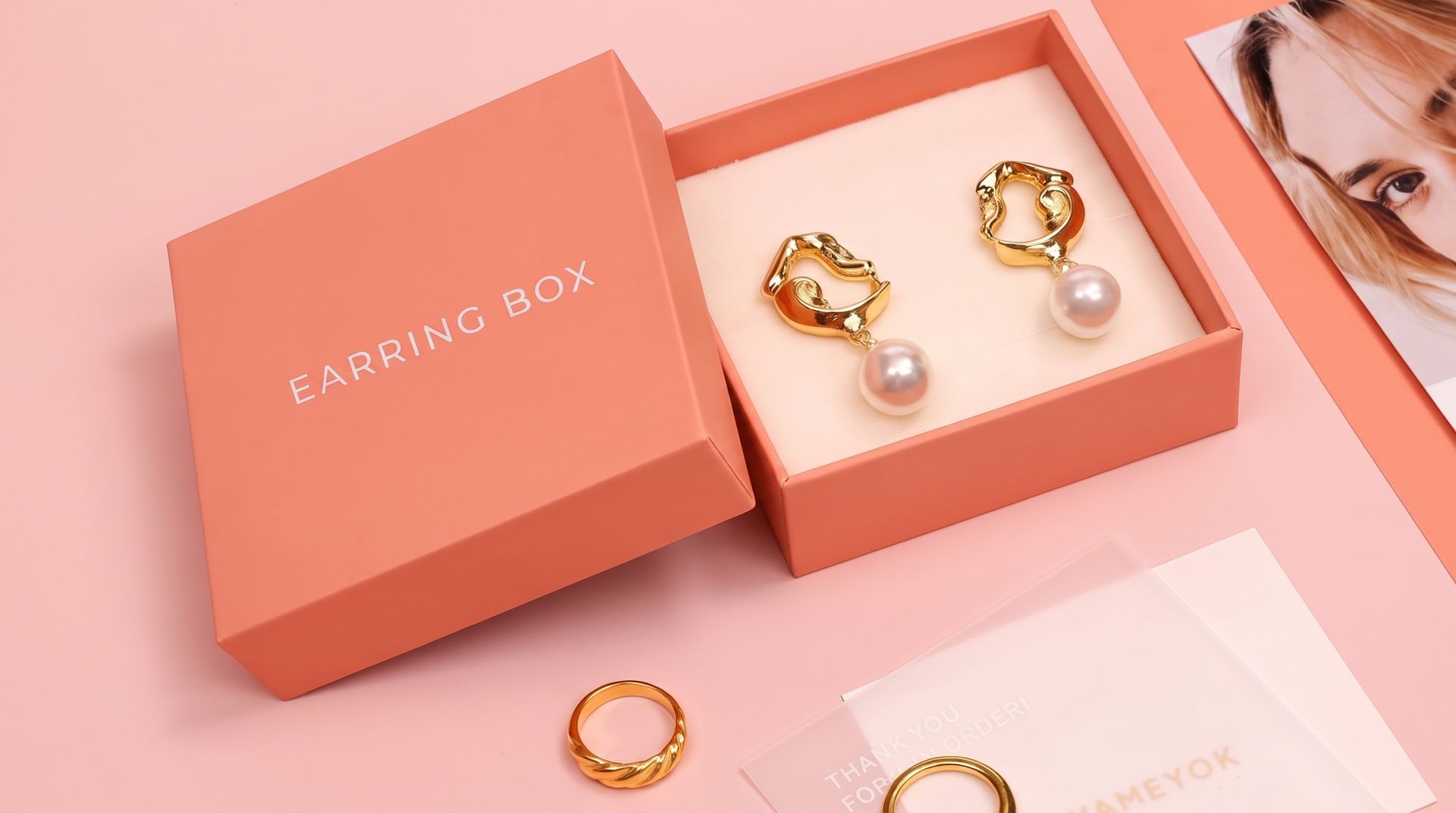
An earring box is sized around the pair it holds, and earrings vary more than they look. A flush stud, a long chandelier drop, and a wide hoop each sit differently, so a single box rarely fits all three well. Size the footprint and the depth to the actual pair plus clearance, so the earrings sit level and protected.
Two dimensions matter most: the footprint, which follows the width of the pair side by side, and the depth, which follows how far the earring hangs or sits proud of the pad. Get those right and the pair neither shifts nor presses against the lid. This guide walks through how to measure, how each format sizes, and which box style fits. For the construction options behind each size, see the rigid boxes listing.
Who Orders Earring Boxes by Size
Buyers reach for size guidance when a catalog carries more than one earring format. Common buyers include:
Jewelry retailers stocking boxes for a counter that sells studs, hoops, and drops alike
Indie jewelers sizing a small box set across an earring catalog
Online sellers who need each format to ship flat and protected
Bridal and event brands sizing a presentation box around a statement pair
Gift programs coordinating box sizes across a gift line
Subscription programs standardizing a repeatable earring box size
Tell us the earring formats across the line and the size set narrows quickly. A catalog with both studs and statement drops usually needs a couple of sizes rather than one stretched box.
How to Measure Earrings Before Sizing
Measure three things before you spec a box. First, the width of the pair sitting side by side, since that sets the footprint. Second, the drop length from the top of the earring to the bottom, since a long drop sets the depth and may need a deeper box so it hangs clear. Third, the post or hook clearance behind each piece, since a stud back or a hook adds height the pad has to accommodate.
With those numbers, the box is sized around the pair plus a small clearance margin so nothing presses against the lid. Send the measurements during quoting rather than guessing from a category, because a box sized to a generic spec may let the earrings shift or bend a fine wire. For the stock options behind each size, see the packaging materials catalog.
Earring Box Styles by Format: Flap vs Lid
The construction holds across formats, but two everyday choices come up most: a flap-front folding carton versus a two-piece lid-and-base. A flap-front opens like a small booklet and usually holds a printed earring card, which suits studs and light drops and restocks fast on a counter. A two-piece lid-and-base lifts off for a cleaner reveal and a substantial feel, which suits heavier or statement pairs and gift programs.
For a deeper pair, a hinged clamshell or a drawer adds depth and a framed reveal. Match the style to the earring weight and the channel: a flap-front and card for fast retail, a lid-off or hinged box for gift and statement pairs.
Stud Format Sizing
A pair of studs fits a compact, shallow box, around 2.5 by 2.5 inches, with a punched pad so the posts push through and the backs seat behind. The depth is shallow because a stud sits close to the pad, though a raised setting or a long post needs a little more clearance so the lid closes flat.
This is the most common everyday earring box, light enough to ship without much added weight. A printed earring card in a flap-front box is a frequent low-cost choice here, carrying the brand while holding the pair; foil on the card lifts it without raising the box cost, and the finishes cover the options.
Drop and Hoop Format Sizing
A drop or dangle earring needs depth so it hangs clear of the surface. A box around 3 by 3 inches with a slit pad lets the wires slide in, and the earrings hang below the pad; a long chandelier needs a deeper box still so the bottom of the drop does not press the base. Measure the full drop length and size the depth to it.
A hoop is sized to its diameter rather than its drop. The box footprint follows the widest point of the hoops side by side, and a slit or notch holds the closed rings so they seat without forcing against the lid. Send the hoop diameter during quoting so the box is sized to the actual pair.
Common Mistakes to Avoid
Sizing to a category instead of the pair: a generic spec may let the earrings shift; measure the actual pair and hardware.
Underspeccing depth for a long drop: a shallow box presses a chandelier against the lid; size the depth to the full drop length.
Forgetting the stud back: a back adds height behind the pad; without clearance, the lid will not close flat.
Using a stud pad for hooks: a punched pad lets a hook swing; drops and hooks need a slit pad.
Sizing a hoop by drop instead of diameter: a hoop is set by its widest point; size the footprint to the diameter.
Ordering one box for every format: a small size set fits a mixed catalog better than one stretched box.
Order Custom Earring Boxes
Send the earring format (stud, drop, or hoop), the pair width, the drop length or hoop diameter, the post or hook clearance, the box style (flap-front, two-piece, clamshell, or drawer), the insert, and target quantity to The Printing World, and our team will size the box around the actual pair and provide proofing guidance once the specifications are confirmed. Reach us through sales@theprintingworld.com, or +16133831487. For how earring boxes fit a wider program, see the jewelry packaging industry page.
Standard production runs 10–14 business days after artwork approval, with sampling reviewed against that window when the spec is locked. For reorders and repeat runs, standard production remains 10–14 business days after artwork approval unless otherwise confirmed. MOQ starts at 100 units, and per-unit pricing improves at higher quantities.
Need custom packaging for your product?
Get pricing, samples, and expert advice — no commitment required.