
Food Tray Sizes: Boats, Open Trays & Divided Compartments
Food tray sizes follow the portion, not a single standard. A snack boat, a single-entree open tray, and a group share tray are three different footprints, and a divided combo tray is different again. This guide covers who orders each size, the styles by portion, how to size from the food itself, and how to plan a multi-size program.

Awais M · Custom Packaging Specialist
Awais M helps small and mid-sized brands get custom packaging right — the box style, the material, the print finish, and the order quantity that actually fits the budget.
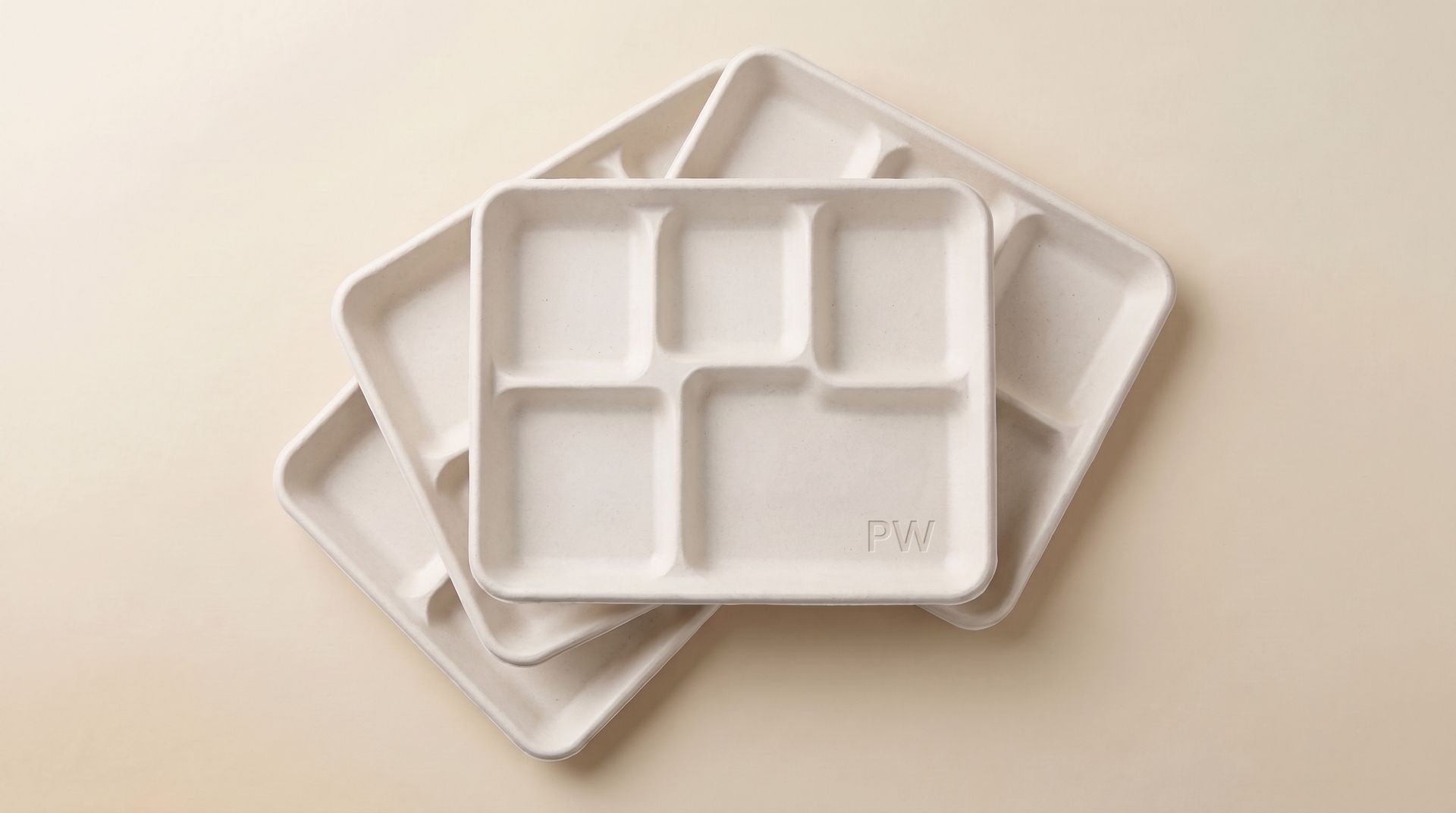
Food tray sizes do not follow a single industry standard because the portion drives the build. A side-snack boat, a single-entree open tray, and a group share tray are three different footprints, and a divided combo tray is different again. This article walks through who orders each size, the tray styles by portion, how to size from the portion itself, and how multi-size programs keep a menu consistent across counter, walk-up, and delivery service.
Who Orders Each Size
Different operators lean on different size bands:
Concession and snack bars: medium and large share trays for fries, nachos, and fair-food portions.
Food trucks and vendors: small boats and compact open trays for handheld single portions.
Quick-service kitchens: divided trays sized to a combo — a main section plus one or two side sections.
Bakeries and delis: small to medium trays for grab-and-go counter portions.
Caterers and event teams: large share trays and divided buffet trays for group service.
Meal-kit brands: divided trays sized to a full prepared meal with separated components.
Venues and cinemas: large share trays carried back to a seat.
The portion sets the band. A single handheld snack wants a compact boat, while a group share or a loaded build wants a deeper or wider tray that holds the volume without spilling.
Tray Styles by Portion Size
Each size band tends to pair with a structure:
Small boat or open tray: a side, a single snack, or a handheld portion at a walk-up window.
Medium open tray: a standard entree portion for counter or dine-in service.
Large share tray: a group portion or a loaded build for a venue or an event.
Divided compartment tray: a combo or a sampler where a main and sides need their own sections.
Deep-walled scoop tray: a saucy or loaded portion that would run over a flat wall.
Auto-lock tray: a heavier or wetter portion that needs a rigid base under it.
Send your portion weight in ounces or grams, the number of sections you need, the serving style, and your target quantity, and we will recommend the size range and structure. Compare builds on the food boxes listing.
How to Size From the Portion
Start with the portion weight and the way the food sits, not a catalog number. Weigh or measure a typical portion, then size the footprint so the food sits flat and visible with a little clearance to the wall. The wall height follows the build: a dry handheld snack wants a low wall for easy eating, while a saucy or loaded portion wants a taller wall so nothing runs over.
A tray sized around the portion plus a little clearance carries cleaner than a generic size forced to fit. A tray too large lets the portion slide and look small, while one packed too tight crushes the food and traps steam. Share your portion in ounces or grams, and a description of how it plates, and the size range follows from there rather than from a guess. See the bakery boxes page for related formats.
The wall height deserves its own measurement. Measure the tallest point of a plated portion, then set the wall a little above it so the food stays contained without a lid pressing down on it. For a portion that will be stacked on a carrier or sit under a sleeve, leave room above the food so the next tray or the sleeve does not crush it. Boats, flat trays, and divided trays all behave differently here, so describe how the food sits, and the wall follows from the plating rather than a single rule.
Multi-Size Programs
Many operators run a small, medium, and large tray that share one printed look so the brand reads the same across the menu. A multi-size program keeps the art consistent while the footprint scales with the portion, and a divided tray can join the set for combos. Plan the sizes together so the print scales cleanly and the trays nest or stack for storage, and confirm the board so the same substrate carries across the set. Browse board options on the material catalog and finishing on the finishes page.
Common Mistakes to Avoid
Copying a competitor's size without checking your portion: their portion may differ from yours — size from your own weight and plating.
Forcing one footprint across the whole menu: a single size drowns small portions and crushes large ones; run a size band instead.
Setting a low wall for a saucy build: sauce runs over a flat wall; raise the wall or use a deep-walled tray for wet portions.
Ignoring nesting and storage: trays that do not nest eat shelf space; plan the size set so the trays stack.
Skipping clearance: a tray sized exactly to the portion crushes the food and traps steam; leave a little clearance to the wall.
Forgetting the divided option for combos: a single open tray lets a combo's components run together; use a divided tray when items must stay separate.
Order the Right Food Tray Size
Send your portion weight, the number of sections, serving style, substrate, and target quantity, and we will recommend the size range and spec the tray. Standard production runs 10 to 14 business days after artwork approval. Reorders on locked artwork may reduce proofing time because the structure and artwork are already approved, but standard production remains 10–14 business days after artwork approval unless otherwise confirmed. Contact The Printing World at sales@theprintingworld.com, or message us on WhatsApp at +16133831487.
Need custom packaging for your product?
Get pricing, samples, and expert advice — no commitment required.
Industries