
Hoodie Packaging Sizes: Lightweight, Heavyweight, and Two-Pack
Hoodie packaging is sized by the folded footprint plus depth for the fold stack, and depth is where a hoodie differs most from a shirt. This guide walks through lightweight, heavyweight, and two-pack formats and how the board changes external size.

Awais M · Custom Packaging Specialist
Awais M helps small and mid-sized brands get custom packaging right — the box style, the material, the print finish, and the order quantity that actually fits the budget.
How Hoodie Packaging Sizes Work
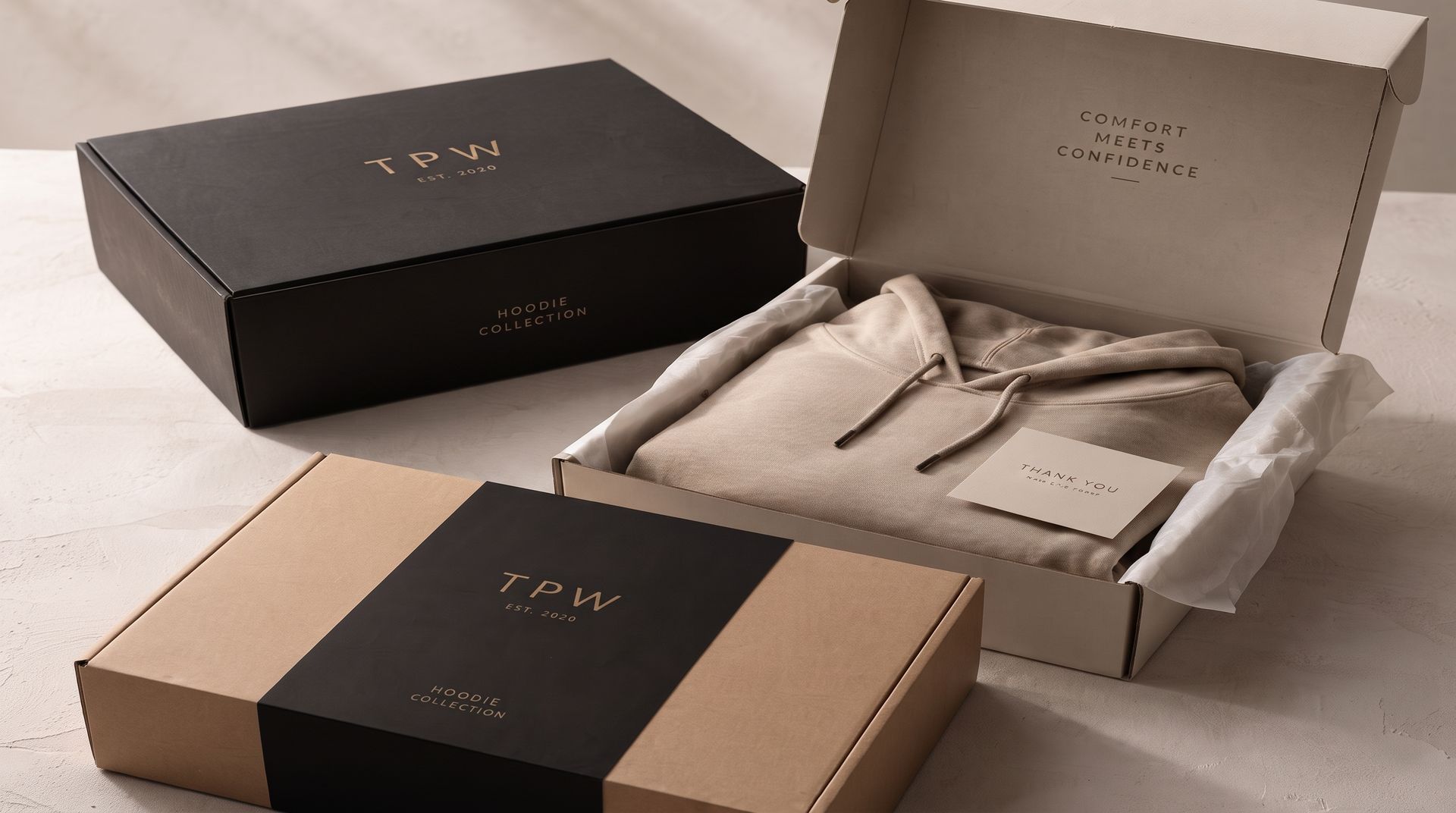
Hoodie packaging is sized by the folded garment footprint plus depth for the fold stack, tissue, and any insert. The footprint is the length and width of the folded hoodie; the depth is how tall the fold stack sits once the garment is folded the way it will ship.
Depth is where hoodie sizing differs most from shirt sizing. A fleece hoodie folds far thicker than a tee, and an oversized or heavyweight hoodie thicker still, so a box that works for a folded shirt will press the lid against a hoodie and crease it.
Who Decides the Box Size
The garment decides the box, not the other way around. A brand that ships one hoodie weight can settle on a single footprint, while a brand running lightweight and heavyweight styles usually needs two depths.
The channel matters too. A retail box can run a little generous because it is handled gently, while a DTC mailer wants a snug fit so the hoodie does not slide in transit. Tell us the hoodie weight, the fold method, and the channel, and we size around that.
Box Styles and the Footprint They Need
The construction shapes the footprint. A corrugated mailer is sized to the folded stack with a little clearance and ships flat, a two-piece rigid box adds wall thickness so the outside reads a touch larger than the inside, and a wrap sleeve is sized to band the folded hoodie rather than enclose it. Picking the construction first keeps the footprint realistic. The custom boxes category page compares the builds.
Lightweight Hoodie Format
A standard pullover or zip hoodie in a midweight fabric folds to a moderate stack. A slim corrugated mailer in E-flute suits this, with a smoother print face and a thinner wall that keeps the parcel compact. This is the most common single-hoodie format for DTC apparel.
Fold method changes the footprint here: a brand that folds sleeves in and the body in thirds gets a smaller, deeper stack than one that folds in half, so it helps to standardize the fold before locking the box.
Heavyweight and Oversized Format
A heavyweight fleece hoodie or an oversized cut folds to a tall stack that needs real depth. A deeper mailer in B-flute adds cushioning and keeps the lid off the fold, which protects the garment and lets it present cleanly on opening.
This format is where shallow boxes fail most often. If a hoodie arrives creased along the fold line, the box was almost always too shallow for the stack, not too small in footprint.
Two-Pack and Bundle Format
A two-pack or bundle ships two hoodies together, so the box needs depth for both stacks plus a divider to keep them from shifting. The added weight also asks more of the board, so a two-pack usually steps up to B-flute even when the single version runs E-flute.
For a bundle that mixes a hoodie with a lighter garment, a divider keeps the heavier piece from settling onto the lighter one in transit.
How Materials Affect the Footprint
The board changes the outside dimensions. A rigid box adds wall thickness, so a folded hoodie that needs a given internal footprint produces a larger external box than the same garment in a thin folding carton. Corrugated adds flute thickness too, more for B-flute than E-flute.
This matters for dimensional shipping costs and for retail shelf space, so it is worth checking the external size against both once the internal footprint is set. The materials guide covers how each substrate behaves, and the apparel packaging industry page shows related garment formats.
Custom Printed Hoodie Packaging with Logo
Once the size is set, custom printed hoodie packaging with logo placement runs across the panels at that footprint. Full-color CMYK handles house artwork and care details, and a brand can hold one footprint while swapping drop graphics, which keeps a varied range on a single die. Matching the print to the box size up front avoids artwork that gets cropped when the footprint changes. The finishes catalog page shows how finishes sit on the printed panels.
Common Mistakes to Avoid
Sizing by footprint only: a hoodie needs depth for the fold stack. Measure the folded height, not just length and width.
Reusing a shirt box: fleece folds thicker than a tee. Spec a deeper box for a hoodie even at the same footprint.
Not standardizing the fold: an inconsistent fold gives an inconsistent stack. Lock the fold method before locking the box.
Ignoring wall thickness: rigid and B-flute add external size. Check the outside dimensions against shipping and shelf space.
One size for every hoodie: lightweight and heavyweight styles fold differently. Run two depths when the range spans both.
Order Custom Hoodie Packaging
To get a tight quote, send the hoodie weight and how it folds (or the folded dimensions), the construction you want (corrugated mailer, rigid two-piece, or sleeve), the substrate (E-flute, B-flute, SBS, or rigid chipboard), your tissue and insert needs, your print method preference, and your target quantity to The Printing World. Our team will review the details and provide a quote and proofing guidance once the specifications are confirmed. Reach us at sales@theprintingworld.com, or +16133831487.
For planning, standard production remains 10–14 business days after artwork approval unless otherwise confirmed, with board, rigid wrapping, and finishing reviewed against that window when the spec is locked. Minimum order quantity starts at 100 units.
Need custom packaging for your product?
Get pricing, samples, and expert advice — no commitment required.