
Tofu Box Sizes & Styles: Sleeves, Cartons, Multipacks
The two questions that decide most tofu packaging orders are how big the box should be and which structure to use, and both come from the sealed inner unit. This post covers common tofu unit sizes, how to translate them into a box footprint, and which box style fits each format and channel.

Awais M · Custom Packaging Specialist
Awais M helps small and mid-sized brands get custom packaging right — the box style, the material, the print finish, and the order quantity that actually fits the budget.
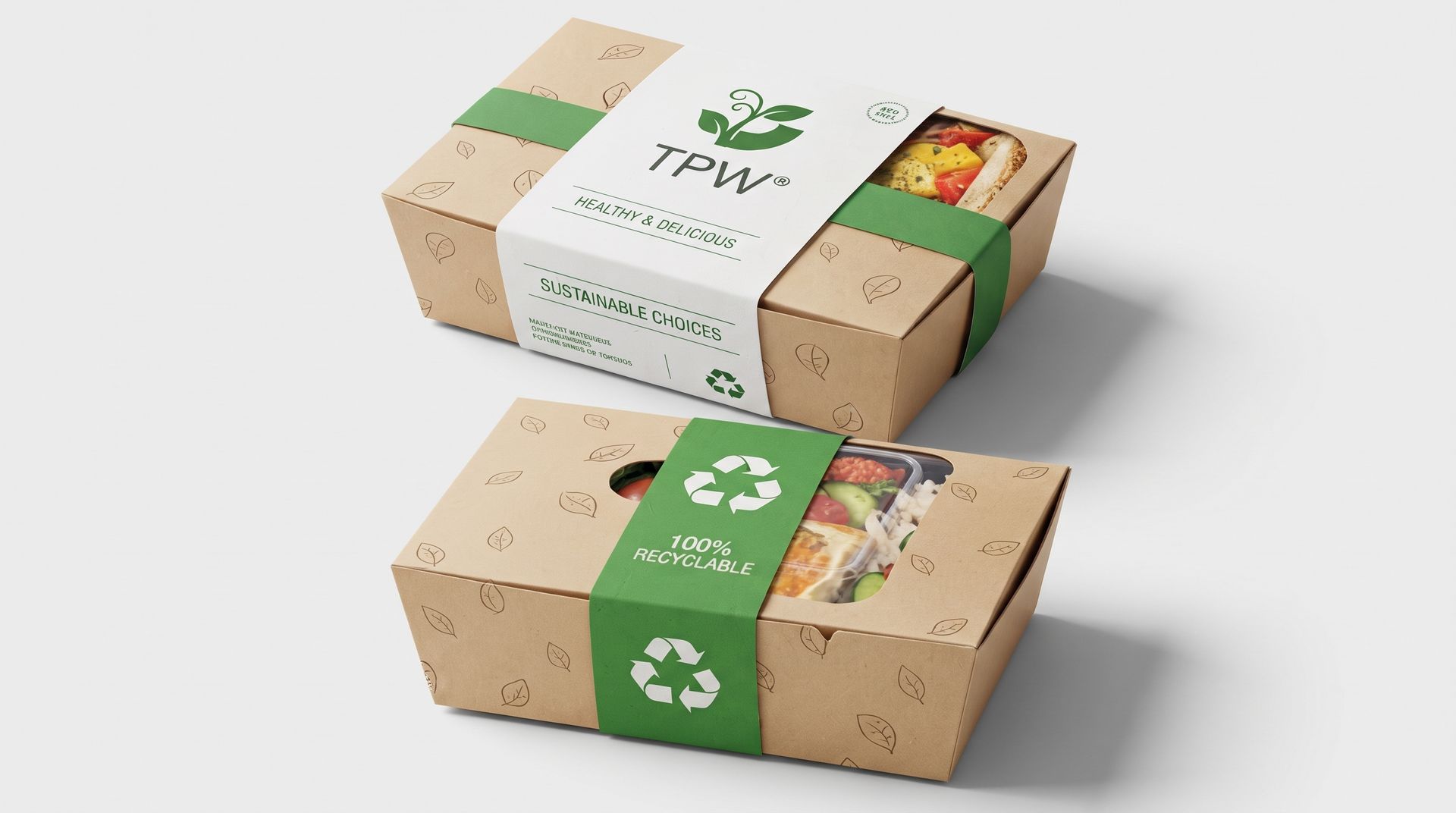
The two questions that decide most tofu packaging orders are how big the box should be and which structure to use. Both answers come from the sealed inner unit, because tofu is sold wet and cold, and the printed box wraps a sealed tub, vacuum block, or aseptic pack rather than holding the brine itself. Get the size and the style matched to that sealed unit and the rest of the spec falls into place. This post covers the common tofu unit sizes, how to translate them into a box footprint, and which box style fits each format and channel.
Who Orders Tofu Boxes by Size and Style
Different operators reach for different sizes and structures:
Retail tofu brands: single-unit cartons and sleeves sized to a standard block or tub for the cold-case facing.
Asian grocery producers: compact sleeves for silken tubs and pressed-block cartons in traditional sizes.
Club and value channels: multipack cartons that group several units under one price and brand.
Foodservice distributors: corrugated shippers sized to the retail-unit footprint plus cold-chain clearance.
Meal-kit brands: compact cartons sized to ride inside a chilled delivery box without shifting.
The size question is really a portion-and-channel question, so the same brand often runs more than one box across its lineup.
Common Tofu Unit Sizes
Tofu units cluster around a few weights, and the box is built around the sealed unit rather than a single standard:
Around 200 g: a compact silken or soft tub, often in a roughly 3 by 3 by 2 inch footprint, suited to a sleeve or small carton.
Around 300 g: a mid-size block or tub, often in a roughly 4 by 3 by 2.5 inch footprint, a common single-serve to two-serve retail unit.
Around 500 g: a full firm or extra-firm block, often in a roughly 5 by 4 by 3 inch footprint, the everyday family unit.
12 to 16 ounce US blocks: the typical North American retail range, sitting close to the 300 to 500 g footprints above.
Multipacks: two, three, or more sealed units grouped into one carton sized to the count and stack.
These are starting points, not fixed dies. The sleeve or carton is cut to wrap the actual unit with clearance for the seal and any tub lip, so send the real dimensions during quoting rather than a nominal weight alone.
Box Styles and How to Choose
Each tofu format pairs naturally with a structure:
Tuck-end folding carton: best for vacuum-sealed or shrink-wrapped blocks that want full-coverage branding and a flat nutrition panel.
Sleeve or belly band: best for water-packed tubs where the seal must stay visible and material cost matters.
Tray-and-sleeve: best where the unit needs to sit square and present cleanly, with an inner tray and an outer sliding sleeve.
Window carton: best where the block or tub should be visible at the shelf, using a die-cut window in a tuck-end carton.
Multipack carton: best for club and value packs grouping several sealed units.
Corrugated shipper: best for distribution, sized to the retail unit plus cold-chain clearance.
Send your tofu format, unit weight, and channel, and we will recommend the size range and the structure. Compare the builds on the food-boxes listing.
Translating a Unit into a Box Footprint
A clean facing comes from a box that wraps the unit snugly. Measure the sealed unit at its widest point, including the tub lip and the seal flange, then add a small clearance so the unit slides in without forcing and without shifting once it is in. For a sleeve, the band length wraps the unit's girth with enough overlap to glue cleanly; for a tuck-end carton, the inside dimensions are set to the block plus a light tolerance.
For a multipack, line up the units the way they will sit and size the carton to that block, leaving room for the units to load on the line. For a shipper, size to the count of retail units, the stack height the cold case can take, and the clearance handlers need in a cooler. A box that wraps too loose lets print drift off the facing, while one cut too tight stresses a tub seal, so the tolerance is where the size is won or lost. See the materials catalog when the substrate affects the caliper and the fit.
Common Mistakes to Avoid
Sizing to a nominal weight, not the real unit: a 16 ounce label does not give the seal flange or tub lip, so measure the actual sealed unit.
Forgetting the seal flange: a tub lip adds width a block does not, so include it in the footprint or the lid will not seat in the box.
One box for every variety: silken tubs and pressed blocks rarely share a footprint, so confirm each format rather than forcing one die.
No clearance for line loading: a box cut to an exact fit jams on the filling line, so add a working tolerance.
Skipping the shipper math: a retail size that does not pack evenly into a shipper wastes cube, so size the retail unit and the master together.
Over-sizing for a fuller look: a loose box lets the unit shift and the facing misalign, so size to the unit, not to the shelf gap.
Order Tofu Boxes
Tell us your tofu format, sealed-unit dimensions, channel, box style, substrate, and target quantity, and we will spec the size and structure and quote it. Standard production runs 10 to 14 business days after artwork approval. Reorders on locked artwork may reduce proofing time because the structure and artwork are already approved, but standard production remains 10–14 business days after artwork approval unless otherwise confirmed. Browse related options on the finishes page. Contact The Printing World at sales@theprintingworld.com, or message us on WhatsApp at +16133831487.
Need custom packaging for your product?
Get pricing, samples, and expert advice — no commitment required.