
Custom Cardboard Lunch Boxes: A Complete Buyer's Guide
Custom cardboard lunch boxes carry a full meal from a kitchen to a desk, an event, or a customer's hand while carrying the brand on every panel. This guide covers who orders them, the core box styles, substrate and food-contact choices, sizing, printing, and the spec mistakes worth avoiding before you order.

Awais M · Custom Packaging Specialist
Awais M helps small and mid-sized brands get custom packaging right — the box style, the material, the print finish, and the order quantity that actually fits the budget.
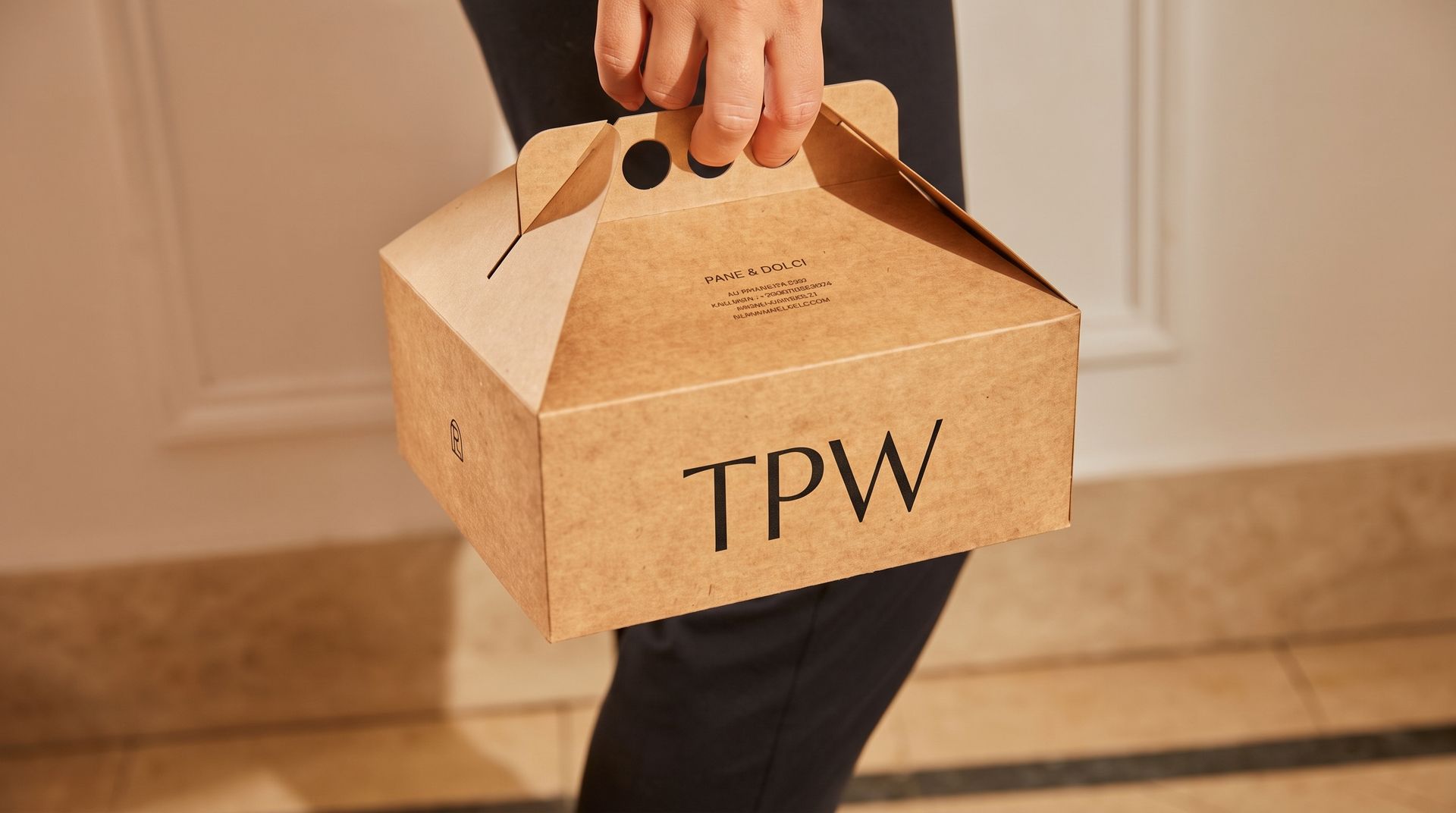
Packing a freshly toasted panini, a dressed garden salad, a chilled fruit cup, and a bag of chips into a single takeout carrier creates an immediate clash of temperatures and moisture levels. Within ten minutes of leaving the prep counter, residual sandwich steam turns crisp potato chips stale, vinaigrette leaks through unsealed bottom corners onto office desks, and heavy drink cans crush thin side walls when catering vans stack orders five layers high. Generic takeout packaging boxes treat cold deli combos and hot entrée platters the exact same way, leading to soggy bread and split handles during rush-hour delivery. Delivering intact, leak-free meals requires custom cardboard lunch boxes engineered with compartmentalized dividers, wet-strength paperboard, and food-safe grease barriers.
Dimensional Blueprints: Matching Box Size to Meal Portions
Corporate caterers, school lunch programs, and café delis serve vastly different portion profiles. If a box is too deep, wraps and fruit cups tumble over one another in transit; if the footprint is too narrow, wide artisanal focaccia sandwiches get squashed at the corners. Measure the footprint of your main entrée, side cups, and cutlery pack, then match your menu to these standard industry dimensions:
Meal Format | Typical Menu Contents | Standard Box Dimensions (L x W x H) | Internal Layout Spec |
Compact Kids' / Snack Box | Half Sandwich, Juice Box, Cookie, Apple | 6.0 x 4.0 x 3.5 in (plus 2.0 in gable handle) | Open single cavity for pre-wrapped snacks |
Standard Deli Gable Box | Full Sub or Wrap, Chips, Pickle Spear, Napkin | 8.5 x 5.0 x 4.5 in (plus 2.5 in gable handle) | Tapered top roof with interlocking handle ears |
Divided Bento Clamshell | Hot Entrée, Two 4 oz Cold Sides, Roll | 9.0 x 6.5 x 2.75 in | 3-cell or 4-cell folded paperboard partition |
Executive Catering Flat-Top | Gourmet Croissant, Side Salad Bowl, Dessert, Cutlery | 10.0 x 7.5 x 3.5 in | Flat stacking lid + die-cut cup insert ring |
Group Platter / Picnic Box | 4 Assorted Wraps, 4 Side Cups, Napkin Pack | 12.0 x 9.0 x 4.0 in | E-flute corrugated floor for heavy load support |
Exterior Box Shape and Catering Fulfillment Mechanics
How fast your kitchen team packs a 200-box corporate lunch order, and whether those meals fit neatly into insulated delivery bags, depends on the physical shape of your custom cardboard lunch boxes:
Auto-Bottom Gable Boxes (Barn Carriers): Combines a pre-glued crash-lock bottom with a peaked top carry handle. Kitchen staff simply press the two opposite corners to snap the box upright in under two seconds, eliminating manual bottom folding during busy morning prep. The built-in handle lets commuters carry their meal without needing a plastic shopping bag.
Flat-Lid Roll-End Tuck-Top (RETT) Catering Boxes: While peaked gable handles are convenient for walk-in customers, they waste vertical space inside delivery vans and cannot be stacked flat. Flat-lid catering boxes feature triple-layered side walls that stack ten high inside insulated courier totes without crushing the meals underneath.
Multi-Compartment Bento Trays with Clear Windows: Built with internal folded paperboard walls that isolate wet pasta salads or slaws from dry sandwiches. Adding a clear top window lets office attendees pick vegetarian, gluten-free, or turkey meals at a glance without opening twenty closed lids.
Web-Corner Leakproof Clamshells: Instead of cut corner flaps that leave pinholes at the base, web-corner boxes fold from a single continuous sheet of paperboard with gusseted, origami-style corners. Because the base has zero cut seams, gravy, soy sauce, and salad dressings cannot drip out of the bottom.
Core Material Selection for Wet Strength and Stack Support
Lunch orders frequently move from walk-in commercial refrigerators (38°F) into humid summer delivery vans, creating surface condensation that softens low-grade recycled board. Selecting the right virgin material for food boxes prevents soggy bases and torn handles:
Unbleached Virgin Kraft Paperboard (18 pt – 24 pt): Made from long virgin softwood fibers that maintain high tensile tear strength around top handle cutouts and corner scores. Its natural brown appearance aligns well with farm-to-table cafes, organic delis, and eco-conscious catering brands.
FDA-Compliant Solid Bleached Sulfate (SBS) Board (18 pt – 22 pt): A bright white, clay-coated virgin paperboard approved for direct food contact. SBS provides a smooth outer face for vibrant multi-color café logos while keeping the interior completely odor-free.
E-Flute and F-Flute Micro-Corrugated Board: Constructed with a 0.8 mm (F-flute) or 1.5 mm (E-flute) fluted inner core sandwiched between two flat linerboards. Specify micro-corrugated stock for heavy executive catering packaging boxes that hold dense items like bottled sparkling water, whole apples, and heavy grain bowls.
Wet-Strength Sized Board: For cold boxed lunches stored overnight in commercial coolers, request paperboard treated with food-safe wet-strength resin sizing at the mill so high refrigerator humidity does not bow the side walls.
Food-Safe Printing and Dietary Labeling Systems
In corporate catering and school nutrition programs, mislabeled meals trigger severe food-allergy risks and slow down buffet lines. Your printing setup must combine odorless food-safe chemistry with rapid dietary identification:
Low-Migration Soy and Water-Based Inks: Chilled butter, mayonnaise, and cheese readily absorb chemical odors from standard petroleum-based solvent inks. FDA-compliant vegetable and water-based inks dry completely odorless and will not rub off onto hands.
Pre-Printed Dietary Check-Grids: Print a clean row of dietary checkboxes (Vegetarian, Vegan, Gluten-Free, Halal, Kosher, Nut-Free, Dairy-Free, Beef, Chicken) along the top lid or gable roof. Kitchen staff can mark the box with a food-safe marker or apply a color-coded sticker right over the designated zone.
Offset vs. Flexographic Printing: Use flexographic presses for simple 1-to-2 color logos on brown kraft boxes to minimize unit costs across daily lunch runs. Choose offset lithography when printing full-bleed patterns, seasonal catering menus, or QR codes linking to nutritional macros and reorder portals.
Interior Lid Menu & Cutlery Reminders: Print your catering reorder phone number, social handles, or a fun lunchtime message on the inside of the lid using food-safe inks—turning every desk lunch into a direct marketing touchpoint for everyone in the breakroom.
Protective Surface Finish and Plastic-Free Grease Barriers
Modern corporate buyers and municipalities actively reject non-recyclable styrofoam and PFAS-treated wrappers. Pairing a plastic-free interior barrier finish with an anti-fog viewing window keeps meals fresh and environmentally compliant:
PFAS-Free Internal Aqueous Dispersion Coating: A water-based polymer barrier sprayed across the interior floor and divider walls. It stops oil from pesto paninis, Caesar dressing, and potato chips from soaking into the paper fibers while allowing the used box to break down in commercial composting or standard paper recycling streams.
Breathable Cellulose & Anti-Fog PET Windows: If your lunch box includes a die-cut display window, patch the opening with wood-pulp cellulose film or anti-fog polyethylene terephthalate (PET) so temperature changes between the cooler and the office breakroom do not cloud the view of the food.
Matte Aqueous Exterior Varnish: Protects exterior soy inks from condensation water rings and kitchen counter spills while preserving a natural, glare-free paper feel.
Order Custom Cardboard Lunch Boxes
Send your meal format, box style, substrate, window or handle requirement, branding, and target quantity, and we will recommend a build and quote it. Standard production runs 10 to 14 business days after artwork approval. Reorders on locked artwork may reduce proofing time because the structure and artwork are already approved, but standard production remains 10–14 business days after artwork approval unless otherwise confirmed. Contact The Printing World at sales@theprintingworld.com, or message us on WhatsApp at +16133831487.
Need custom packaging for your product?
Get pricing, samples, and expert advice — no commitment required.