
Dessert Box Sizes & Construction: Single-Serve to Catering Platter
Dessert boxes scale with piece count and footprint, not a fixed standard. This guide explains how sizing and construction work together, from single-serve cartons to catering platters, how board caliper should step up as the box grows, and the sizing mistakes that leave an assortment sliding or crushed.

Awais M · Custom Packaging Specialist
Awais M helps small and mid-sized brands get custom packaging right — the box style, the material, the print finish, and the order quantity that actually fits the budget.
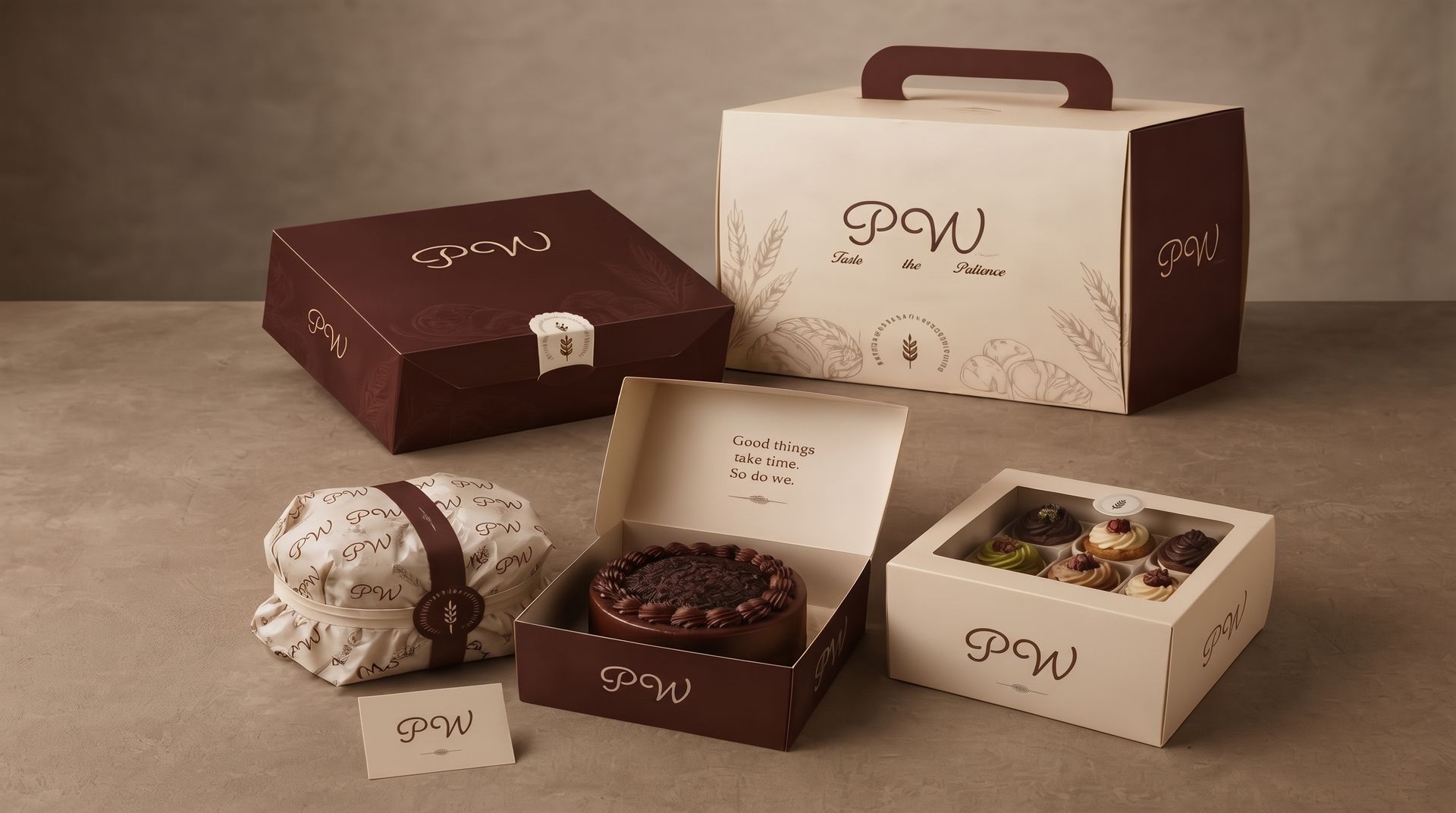
How Dessert Box Sizing Actually Works
There is no single standard dessert box size, because the format scales with the piece count and the footprint of what you sell. The practical approach is to size around your most common order: the dimensions of the largest piece, how many pieces per box, and the clearance the assortment needs so nothing presses against the lid. Get those three inputs right and the box holds the order cleanly.
This guide explains how sizing and construction work together, from a single-serve carton to a catering platter, and how the box style follows the count. For the product overview, see custom dessert boxes; for related formats, see cake boxes and the Bakery Boxes category.
Who Orders These Dessert Boxes
Sizing questions come from across the dessert trade. Common buyers include:
Independent bakeries sizing a box around a rotating daily mix
Dessert bars matching a window box to a signature assortment
Cafes running compact single-serve and small shareable cartons
Caterers needing a wide, low platter footprint for events
Delivery brands sizing a mailer carton with clearance for an insert
Hotels and banquet teams standardizing a fixed service portion
Gift programs sizing a two-piece box around a curated set
Box Styles and the Size Behind Them
Construction and size are decided together. Each style sits in a size band that follows the count:
Single-serve tuck-end carton: a compact footprint sized to one portion plus a little clearance.
Four- and six-count bakery box: a wider tray-style carton that keeps the pieces from sliding together.
Window display box: sized so the window frames the assortment without weakening the panel.
Two-piece lid and base: sized so the lid clears the tallest piece on the base.
Platter-style catering box: a low, wide footprint sized to the full spread.
Mailer-style carton: sized with extra clearance for an insert and a secure closure.
The depth matters as much as the footprint. The box has to clear the tallest piece so the lid does not crush a topping, and the base has to be sized so the assortment sits without shifting. Send the dimensions of your largest piece and the counts you sell, and we will recommend a size range around that, plus clearance.
Single-Serve to Catering Platter
Think of sizing as a ladder. A single-serve box runs the smallest footprint, a four- or six-count box steps up to a shareable tray, and a platter box runs the widest, lowest footprint for a full event spread. Between those, a mailer-style box sits wherever your shipped assortment lands, with the insert dictating the internal clearance. Rather than chasing exact dimensions in the abstract, plan around a common format size plus clearance and confirm it against your actual product at quoting.
A useful habit is to keep a short internal sizing sheet: the footprint and height of each dessert you sell, the counts you box, and the clearance each assortment needs. With that in hand, picking a box size becomes a matter of matching the order to a format rather than guessing, and reorders or new sizes drop in without re-measuring from scratch. Bring that sheet to quoting, and the recommendation comes back faster.
Caliper and Size Together
Bigger boxes need a sturdier board. A single-serve carton can run a lighter caliper since it carries one portion, while a six-count box or a platter steps up so the base holds square under the weight. A box too large on a light board lets the assortment slide and the base sag, while the right caliper keeps the build square. Choosing the size and the caliper together keeps the box from flexing in service. A second consideration is how the assortment is loaded: a box filled from the top suits a lift-off lid, while a box filled from the end suits a tuck-end carton, and the loading method can nudge both the footprint and the closure choice. Thinking through the fill before locking dimensions avoids a box that holds the order but is awkward to pack at volume.
Common Mistakes to Avoid
Guessing dimensions without the product in hand: a box spec'd from memory rarely fits. Measure your largest piece and the assortment footprint first.
Forgetting vertical clearance: a shallow box crushes tall toppings. Size the depth to the tallest piece plus clearance.
Running a light board on a large box: the base sags under the weight. Step up the caliper as the footprint grows.
Packing a box past capacity: overfilling presses pieces together. Leave clearance so the assortment sits without contact.
Sizing the window before the box: the window should follow the final footprint. Lock the box size, then frame the window.
Ignoring the insert in the size math: an insert eats internal space. Add the insert clearance when you set the box dimensions.
Order Custom Dessert Boxes in the Right Size
Send the dimensions of your largest dessert, your piece count per box, the box style you have in mind, and your target quantity to The Printing World, and we will recommend the size and caliper for your order. Reach us at sales@theprintingworld.com, or +16133831487, and see other format: custom waffle boxes, custom muffin boxes, or cupcake boxes.
Standard production runs 10–14 business days after artwork approval, with custom dies reviewed against that window when the spec is locked. Reorders on locked artwork may reduce proofing time because the structure and artwork are already approved, but standard production remains 10–14 business days after artwork approval unless otherwise confirmed.
Need custom packaging for your product?
Get pricing, samples, and expert advice — no commitment required.